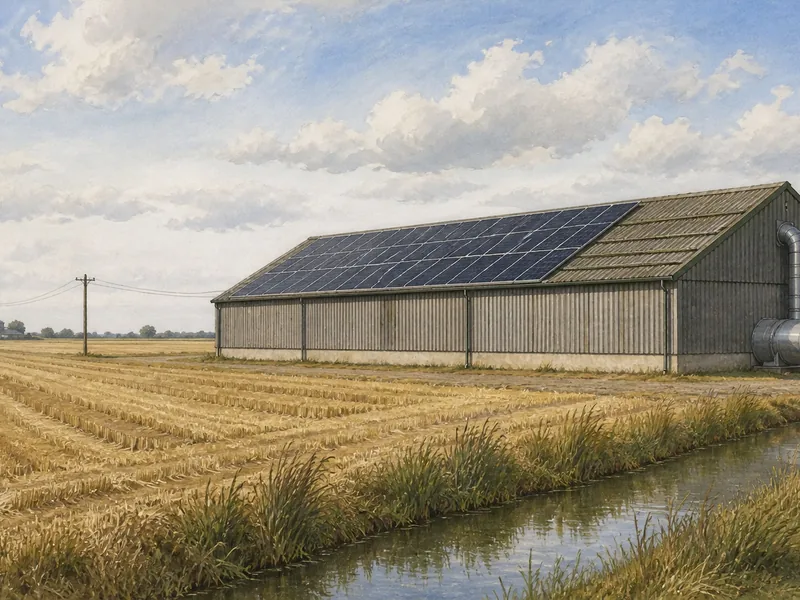
Most conversations about solar on a farm start with the buildings. They should start with the supply.
The roof determines what could physically be installed. The incoming electricity supply determines what may be connected, at what size, and at what cost. Those are different questions, and the second one is the one that stops projects.
Three questions about your supply, in order
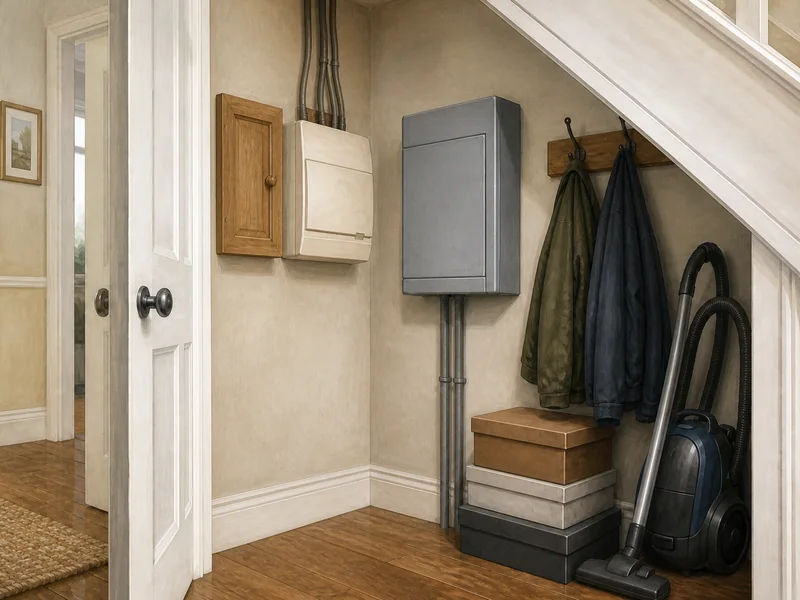
Do you have three-phase at all? A lot of holdings do, because a lot of farm equipment assumes it. A lot do not, and discover it late. It is worth establishing as a fact rather than an impression.
What capacity does it have? Having three-phase is not the same as having spare capacity on it. A supply already carrying drying plant, refrigeration or a workshop has less headroom than the same supply on paper.
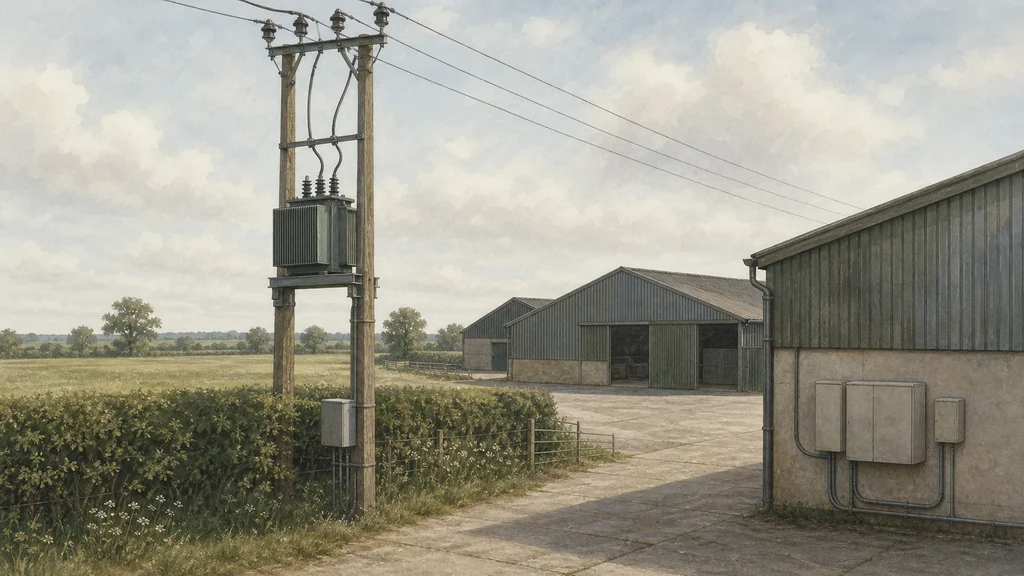
Where on the holding does it land? This is the one most often skipped. A three-phase supply at the farmhouse is not a three-phase supply at the grain store four hundred metres away. Distance between the supply and the building you want to generate on is real cost, and it is cost that appears late in a project if nobody asked early.
Who decides, and who to ask
There are two separate companies involved and they are frequently confused.
Your supplier is who bills you. They sell you electricity and they have nothing to do with what you are permitted to connect.
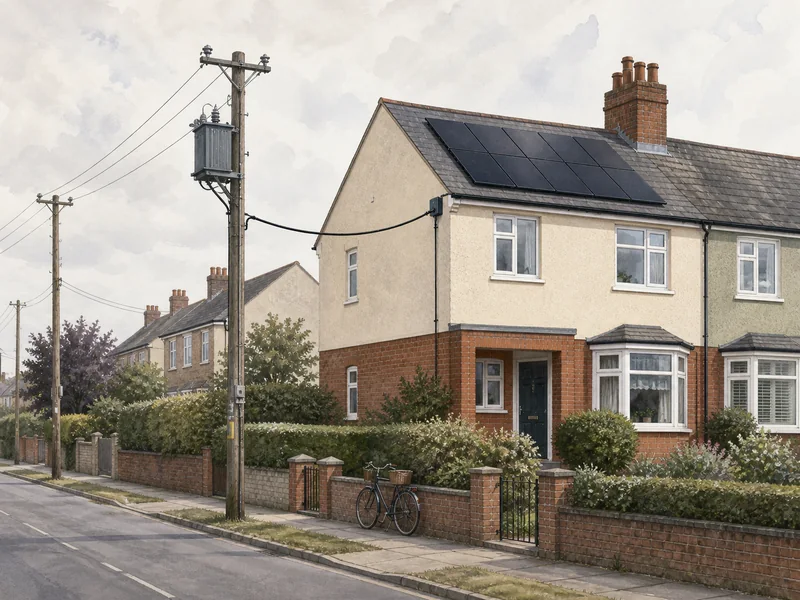
Your distribution network operator owns the wires and the transformer that bring power onto the holding. They decide what may be connected, on what terms, and what any change costs. If you do not know who yours is, it is determined by geography and can be looked up.
Connecting generation is a permission from the network operator. Which route applies depends on size: below 3.68 kW per phase, Engineering Recommendation G98 applies, and the installer notifies afterwards. Above that, the more involved G99 route applies, with an application made and an offer received before anything is commissioned. Anything of a scale worth doing on a farm building is on the G99 route.
Sources: Energy Networks Association, “Connecting generation to the electricity networks”, checked 19 August 2026, https://www.energynetworks.org/industry/connecting-to-the-networks/connecting-generation-to-the-electricity-networks; Energy Networks Association, “Who’s my electricity network operator?”, checked 17 August 2026, https://www.energynetworks.org/customers/find-my-network-operator
What we cannot tell you, and neither can your installer
We cannot tell you what your connection will cost, how long it will take, or whether you will be offered an export limit.
Nor can an installer, and this is worth being firm about. Those answers come from your network operator, in an offer, against your specific site. Until that offer exists, any figure is an estimate of someone else’s decision.
What varies is not small. Whether the local network needs reinforcing to accept your generation is a question about infrastructure you do not own and cannot inspect, and the answer differs between two farms on the same road.
Anyone quoting you a connection timeline or a connection cost before the offer exists is guessing. They may be guessing from experience, which is better than guessing from nothing, but the distinction between an experienced guess and a figure you can plan around matters when you are committing capital.
Where an upgrade is genuinely on the table
Sometimes the answer is that the supply needs to change. That is a legitimate outcome and not automatically a project-killer, but it changes the nature of the decision.
An upgrade is a network operator job, quoted by them, and its cost depends on what is already in the ground near you. It is also an opportunity, in that a holding upgrading its supply for one reason often has other reasons queuing behind it: an expanded workshop, EV charging, more refrigeration, a heat pump in the farmhouse. If a supply change is being considered at all, it is worth considering once, against everything the holding is likely to want in the next decade, rather than twice.
What it should not be is a surprise discovered after equipment has been ordered.
Whose obligation the application is
Compliance is the responsibility of the customer, which is usually but not always the owner of the generation. In practice a competent installer makes the submission on your behalf, and that is normal and sensible.
The obligation still sits with you. So ask who is making it, and ask for written confirmation that it was made and what the response was. A file note that the application “went in” is not the same as an offer.
The order to do this in
- Establish what supply exists, its capacity, and where it physically lands.
- Establish which buildings and which meters are in scope, and who pays each bill.
- Establish the connection route that will apply, and get the application made.
- Then size the system and take quotations against the answer.
Projects that run in that order rarely fall over on the connection. Projects that run in the reverse order, roof then quotation then deposit then application, are where the expensive surprises live.
What Eco Connect does, and does not, do here
We assess and advise. We do not install, we do not price the work and we do not make the connection application.
What we do is make sure the supply question is answered before money is committed to a design that depends on the answer, and make sure that what you have been told about timescales and costs is separated into what is known and what is being guessed.
Where work is appropriate, it is carried out by a delivery partner, and the technical design and the quotation come from them.
Information and source control
Information correct as at 1 September 2026.
Connection requirements and network operator processes change. The engineering recommendations named here are linked to their source with the date checked. This page deliberately gives no connection costs or timescales, because those come from your own network operator against your own site and nothing published can substitute for that.
Eco Connect is an independent advisory business. It does not carry out installations, holds no installer accreditation, and nothing on this page is planning, legal, tax or financial advice.