Farms

Renewable Energy Advice for Farms

Independent advice on solar, battery storage and grid connection for working farms in Lincolnshire and the surrounding counties.

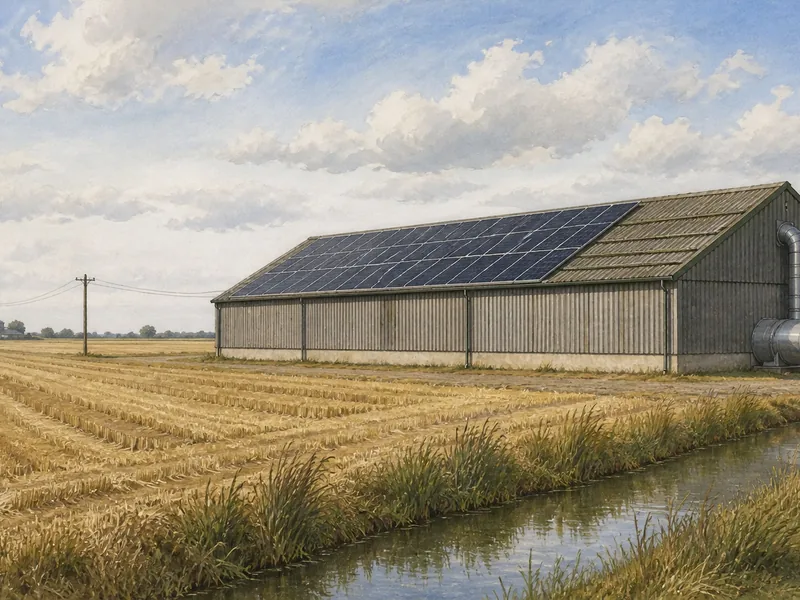
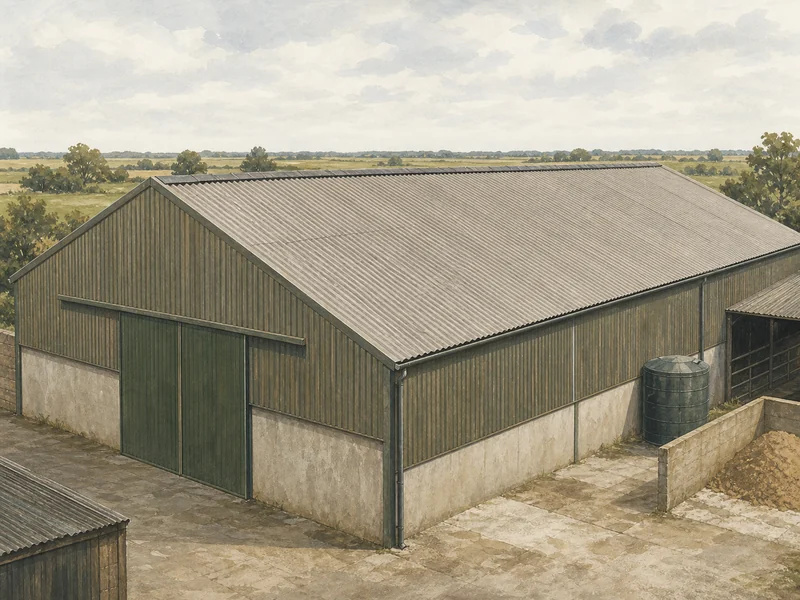
Illustration of a British farm building with rooftop solar

What we do for farms

Eco Connect Services is an independent renewable energy consultancy. We do not install anything, we do not sell equipment, and we do not hold or claim any installer accreditation. That is the whole basis of the advice: we have nothing to sell you, so there is no product we need the answer to be.

We assess, we do not fit.

We look at your buildings, your land, your electrical supply and how your farm actually uses energy across the year, and we tell you what is worth pursuing and in what order. Where work is appropriate, it is carried out by a vetted delivery partner, and the final technical advice and the quotation come from them.

We will tell you when the answer is no.

Not every barn roof is a candidate, not every farm has the daytime load to make self-consumption work, and not every site has a straightforward connection. Where that is the position, we say so before you have spent anything on it.

We work from what can be checked.

Every rule, threshold and scheme named on this site is linked to the government or regulator source it came from, with the date we checked it. Where we could not verify something, we say that instead of guessing.

The energy problems farms actually have

A farm is not a large house. The thing that decides whether generating your own electricity is worth anything is not the size of the roof, it is the shape of the demand underneath it, and farm demand is shaped by the work. These are the patterns that change the answer.

Grain drying.

A drying floor or a continuous-flow drier is a large load concentrated into a few weeks, and those weeks fall in late summer when generation is at its highest. That coincidence is the single most favourable pattern in arable farming, and it is also the most seasonal: for most of the year the same array is generating into a much smaller load.

Refrigeration and chilling.

Cold stores, milk tanks and vegetable chilling run continuously and are one of the few farm loads with a genuine round-the-clock base. That is the load pattern that most often makes on-site generation and storage worth assessing together rather than separately.

Milking parlours.

Vacuum pumps, plate coolers and water heating fall into two hard peaks a day, and where those peaks sit relative to daylight changes the value of the system considerably between a twice-a-day and a robotic system.

Irrigation.

Pumping is heavy, intermittent and weather-driven, and it draws hardest in exactly the dry, bright conditions that produce the most generation. It is worth quantifying rather than assuming, because irrigation demand and generation do not correlate as neatly across a whole season as they appear to on a single hot day.

Three-phase supply and its absence.

A lot of farm equipment assumes three-phase. Whether you already have it, what capacity it has, and where on the holding it lands, will constrain both what you can install and what it costs to connect. This is a question to answer at the start, not after a quotation.

Diversification and the buildings that came with it.

Let units, workshops, storage, holiday accommodation and equestrian buildings each carry their own demand pattern and, frequently, their own metering. Who pays the bill and who owns the roof are separate questions, and both have to be settled before any generation on that building means anything financially.

Older buildings.

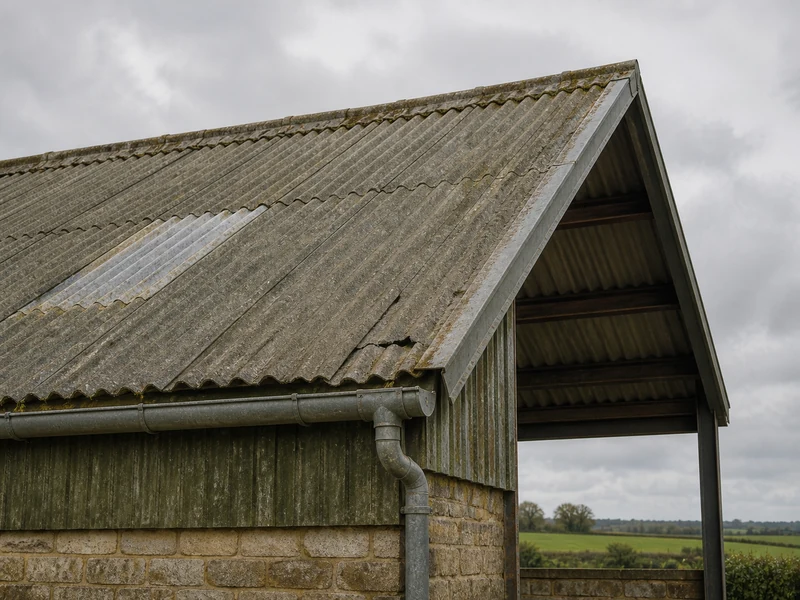
Structural condition, roof covering, purlin spacing and the age of the electrical installation matter more on a farm than almost anywhere else, and they are usually the reason a technically attractive roof turns out not to be a candidate.

Planning for farm buildings

Solar on a farm building is dealt with by a different set of permitted development rules from solar on a house, and there is one step in them that catches people out.

Rooftop solar on a building other than a dwellinghouse or a block of flats can be permitted development, subject to limits: no more than 0.2 metres beyond the plane of a pitched roof, no more than 1 metre above a flat roof, not within 1 metre of the external edge of the roof, and not on a scheduled monument, a listed building or a building in the curtilage of one.

The step that gets missed is this. Where the rooftop array is not microgeneration, the developer must apply to the local planning authority, before beginning the development, for a determination as to whether prior approval is required for the design and external appearance, and in particular the impact of glare on neighbouring occupiers. Microgeneration means a generating capacity not exceeding 50 kilowatts. Most farm-scale rooftop arrays worth doing are above that, which means most farm-scale rooftop arrays need that application made first.

Sources: The Town and Country Planning (General Permitted Development) (England) Order 2015, Schedule 2, Part 14, Class J, paragraphs J.1 and J.4(2), checked 19 August 2026, https://www.legislation.gov.uk/uksi/2015/596/schedule/2/part/14; Energy Act 2004, section 82(8)(a), checked 19 August 2026, https://www.legislation.gov.uk/ukpga/2004/20/section/82

The full national rules, including ground-mount, designated land and the changes taking effect on 27 August 2026, are set out on our planning hub: /insights/planning-and-costs/

Grid connection, the practical blocker

On a farm, the constraint is more often the connection than the roof.

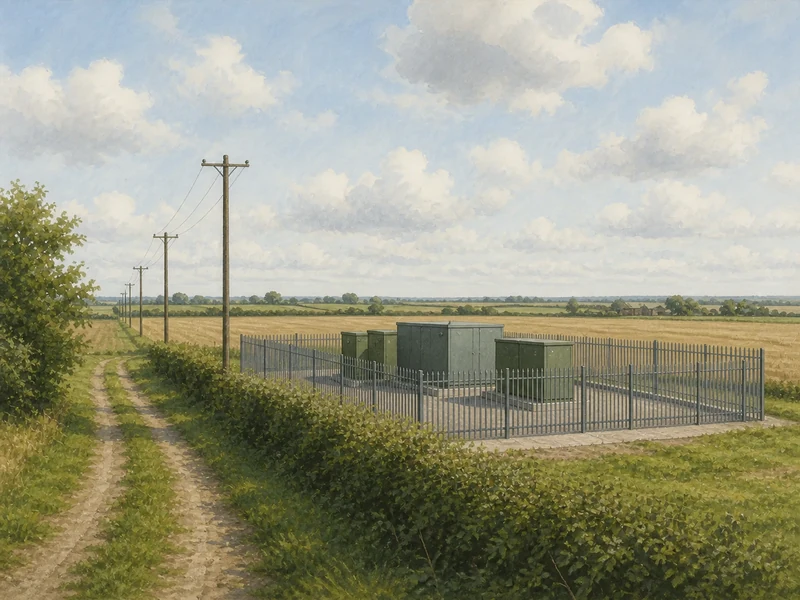
Connecting generation is a permission from your distribution network operator, which is the company that owns the wires onto the holding, not the company that bills you. Which route you are on depends on size: below 3.68 kW per phase, Engineering Recommendation G98 applies; above it, the more involved G99 route applies instead. Anything of a scale worth doing on a farm is on the G99 route.

Compliance is the responsibility of the customer, who is usually but not always the owner of the generation. In practice a competent installer makes the submission, but the obligation sits with you. Ask who is doing it, and get confirmation that it was done.

What we cannot tell you in advance is what your connection will cost, how long it will take, or whether you will be asked to accept a limit on how much you can export. Those come from the network operator in its offer, against your specific site. Anyone who quotes you a connection timeline before that offer exists is guessing.

Sources: Energy Networks Association, "Connecting generation to the electricity networks", checked 19 August 2026, https://www.energynetworks.org/industry/connecting-to-the-networks/connecting-generation-to-the-electricity-networks; Energy Networks Association, "Who's my electricity network operator?", checked 17 August 2026, https://www.energynetworks.org/customers/find-my-network-operator

How the advice process works

Four stages, made concrete for a farm. Nothing here commits you to anything.

  1. Understand.

    What the holding is, what it does, which buildings and which land are in play, what you are actually trying to fix, and whether anything is already planned that would change the answer.

  2. Assess.

    Roofs and their structural condition, orientation, shading, the incoming supply and whether it is three-phase, where your demand sits across the day and across the year, what metering exists and who pays which bill.

  3. Recommend.

    What is worth pursuing, what is not, and in what order. That is written in plain English, with the reasoning shown, so it can be tested rather than taken on trust. If the recommendation is to do nothing yet, we say that.

  4. Deliver.

    Where you choose to proceed, work is carried out by a vetted delivery partner. The final technical advice and the quotation come from them, not from us. We coordinate and we stay involved, but we do not price the work and we do not fit it.

Farm solar grants: what is actually open

Search for farm solar grants and you will find a great deal of confident material about funding available in 2026. Checked against the government's own list on 27 August 2026, the position is narrower than that material suggests, and it is worth knowing before a quotation is built on it.

The Improving Farm Productivity grant, round 2, is closed. That was the scheme that mattered for this: it covered solar photovoltaic systems explicitly, paying between £15,000 and £100,000 for solar at 25 per cent of eligible costs, on a minimum project of £60,000. It is the scheme most commonly referred to when farm solar funding is mentioned, and it is not open.

The Farming Equipment and Technology Fund 2026 is also closed. It closed to applications on 12 May 2026.

What is open on the government's list is aimed elsewhere. The Sustainable Farming Incentive 2026 has a second application window opening in September 2026 and covers farming and land management practices. Capital Grants 2026 opened on 30 July 2026 and covers capital items supporting environmental outcomes. Farming in Protected Landscapes is open year-round, with projects required to end by March 2029. None of these is a solar capital grant, and none of them should be presented to you as one.

So the practical position for a farm considering rooftop solar today is that the numbers have to work on their own: on your generation, your demand pattern, your connection and your tariff. That is a harder case to make than one propped up by a grant, and it is the case worth testing properly, because if it only works with funding that does not exist, it does not work.

If anyone quoting you refers to a grant, ask them to name the scheme and show you where it is open. Then check it yourself, on the government's own page rather than on an installer's: https://www.gov.uk/guidance/funding-for-farmers

Sources: GOV.UK, "Funding for farmers, growers and land managers", checked 27 August 2026, https://www.gov.uk/guidance/funding-for-farmers; GOV.UK, "About the Improving Farm Productivity grant round 2, who can apply and what the grant can pay for (closed)", checked 27 August 2026, https://www.gov.uk/government/publications/improving-farm-productivity-grant-round-2-applicant-guidance/about-the-improving-farm-productivity-grant-round-2-who-can-apply-and-what-the-grant-can-pay-for; GOV.UK, "Farming Equipment and Technology Fund (FETF) 2026 (Closed)", checked 27 August 2026, https://www.gov.uk/government/publications/farming-equipment-and-technology-fund-fetf-2026-closed

What we would tell you not to do

The useful part of independent advice is the part that costs someone a sale. Some of the things we would say to a farm before anything else:

Do not size an array to the roof.

Size it to the load. A large roof with a small daytime demand underneath it produces a large export problem, not a large saving.

Do not assume a grant exists.

There is no open grant for farm solar in England as at 27 August 2026, and there is a great deal of published material implying otherwise. The funding position is set out in full further up this page.

Explore

Do not order equipment before the connection position is known.

On the G99 route the network operator's offer can change what is worth installing. Finding that out after the panels are on the roof is an expensive way to learn it.

Do not put a new roof on the list after the panels.

If the covering has ten years left in it, that is the job that comes first. Taking an array down and putting it back is a cost nobody quotes for at the outset.

Do not treat a headline payback figure as a forecast.

A payback number is only meaningful against a specific roof, a specific demand pattern, a specific tariff and a specific date. We publish worked examples with every assumption exposed, so you can see what the answer turns on and put your own figures through it. What we do not do is publish an average and call it your estimate, and neither should anyone quoting you.

Information and source control

Information correct as of: 19 August 2026.

Planning rules, grant schemes and network connection requirements change. Every rule and scheme on this page is dated and linked to the government or regulator source it was taken from. Check the source before you rely on it.

Eco Connect is an independent advisory business. It does not carry out installations, holds no installer accreditation, and nothing on this page is planning, legal or tax advice.

Ready to understand what could work for you?

Start with a free renewable consultation. We will listen to what you want to achieve, ask a few practical questions and help identify the most useful next step.

Call