Two quotes arrive for the same roof and the same number of panels, and the numbers do not match. Sometimes by thousands.
The instinct is to assume one installer is charging more for the same work. Occasionally that is true. Far more often the two quotes describe genuinely different jobs that happen to share a panel count, and the difference sits in places the quote does not itemise.
Panel count is not system size
Panels are not a fixed unit. A 400W panel and a 350W panel occupy roughly the same roof space, but ten of the first generate meaningfully more over a year than ten of the second. A quote built around higher-output panels usually costs more per panel and less per kilowatt of capacity delivered.
So before comparing two prices, ask each installer for the total system size in kW rather than the panel count. That is the number the price should be judged against.
The part of the quote nobody itemises
Here is what most buyers do not expect: the hardware is often not the expensive part, and it is rarely the part that separates two quotes.
Scaffolding is priced by the job, not by the panel. It costs roughly the same to scaffold an elevation for six panels as for sixteen. If one quote includes it and the other adds it later, the cheaper-looking quote is not cheaper.
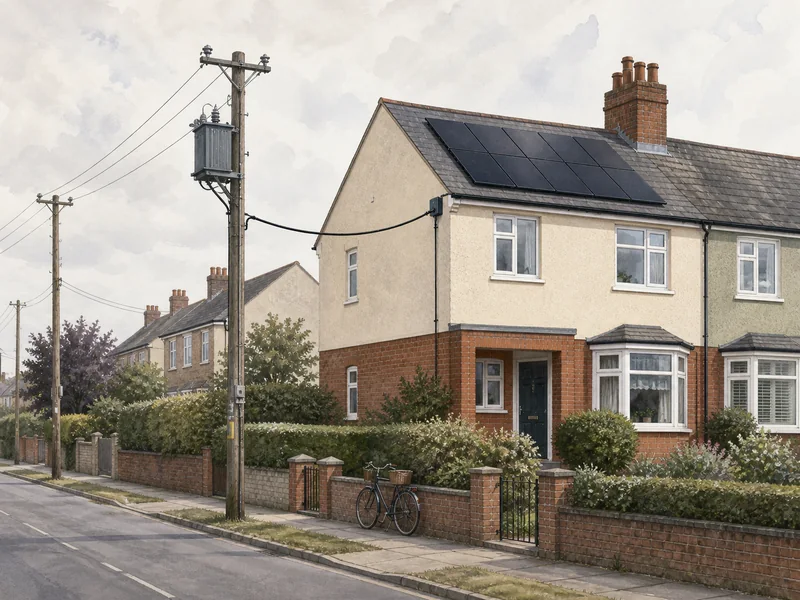
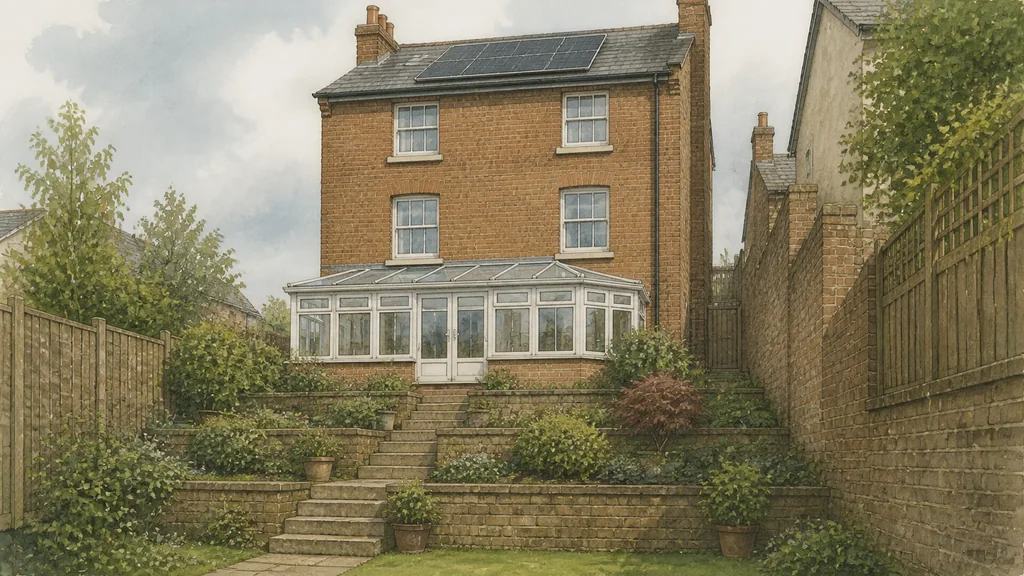
Access difficulty is the other big variable. A two-storey semi with clear frontage and a driveway to park on is a straightforward job. A property with restricted access, a conservatory or outbuilding in the way, high or steeply pitched roof, or anywhere needing a cherry picker rather than standard scaffold, is a different job at a different price.
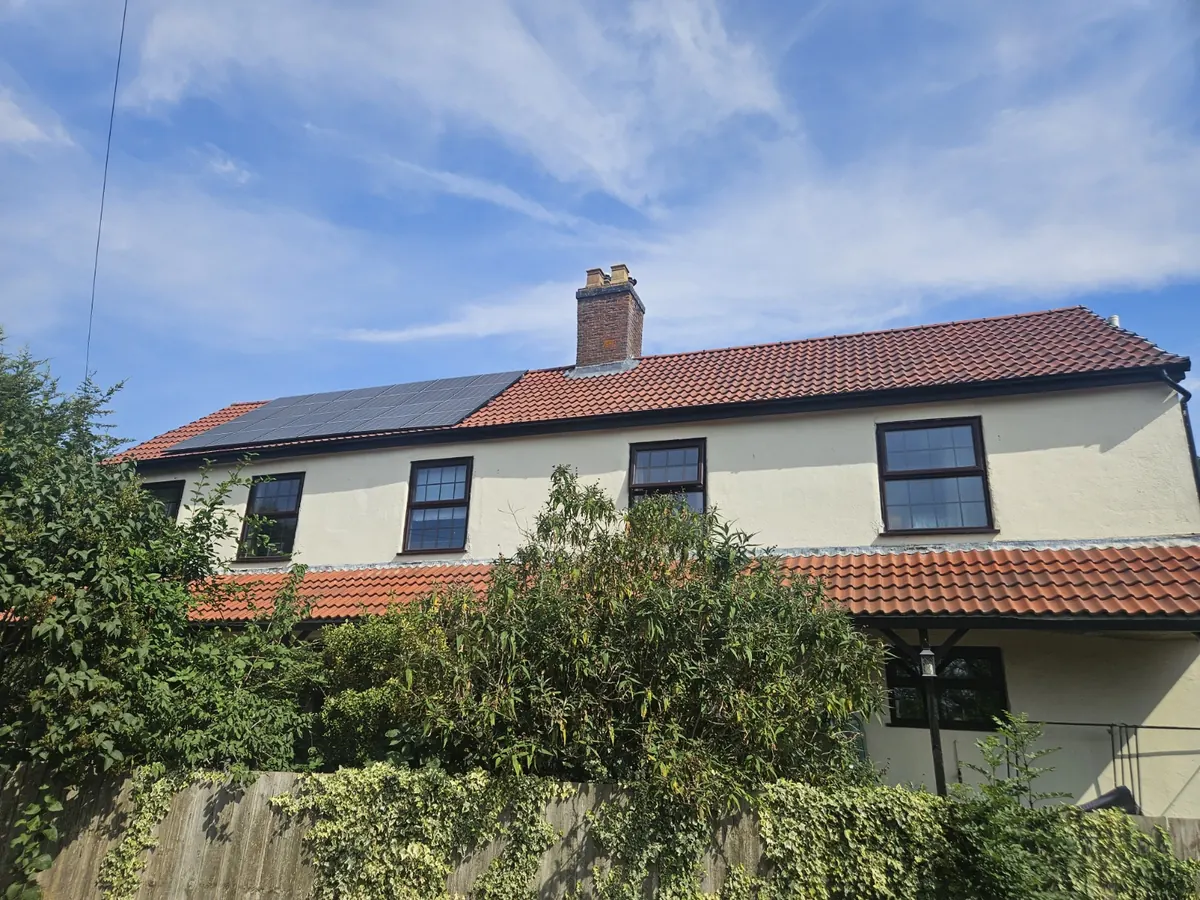
Roof type and condition matter more than people expect. Slate, clay, concrete tile and old felt are not the same job. An in-roof integrated system, a flat roof needing a ballasted frame, or a roof needing structural checks before anything goes on it, all add cost that has nothing to do with the panels.
Cable runs and equipment location. Where the inverter and any battery can physically go, and how far the cable has to travel to get there, changes the labour. A loft-mounted inverter with a short run to the consumer unit is not the same as a garage installation at the other end of the property.
Consumer unit and grid connection work. Some properties need electrical work before anything can be connected. That is real cost, and a quote that has not accounted for it is a quote that will change.
The mistake that costs the most
This is the part worth reading twice, because it is the decision people most often get wrong and cannot easily undo.
Fixed costs do not halve when the array halves.
Scaffolding, access, and getting a team mobilised to your property are largely the same whether they fit six panels or sixteen. Those costs are paid once per visit, not once per panel.
Which means the marginal cost of the panels that would have fitted on the first visit is far lower than the cost of adding them on a second visit later. Fit a small array now and extend it in three years, and you pay scaffolding, access and mobilisation twice, for a job that could have been done once.
If you are constrained by roof space, that is simply a constraint. But if you are constrained by budget, understand the trade-off before you choose. A smaller system is not proportionally cheaper, and a future extension is not proportionally priced.
Ask this question, whatever size you are quoted for: what would a larger array have cost on the same scaffold? The answer is often surprisingly small, and it is the single most useful number in the whole conversation.
There is a related limit worth checking at the same time. Above a certain size, your system needs approval from the local electricity network operator before it can be connected, and that affects both timing and what you are allowed to export. It is worth understanding that alongside the sizing decision rather than after it.
The inverter decision
The inverter converts what your panels generate into something your home can use, and it is a genuine source of price variation.
A single string inverter is the cheaper option and works well on a simple, unshaded roof facing one direction. Power optimisers or microinverters, fitted at or near each panel, cost more but keep the system performing when part of the roof is shaded or panels face different ways. They also give you per-panel monitoring, which turns an invisible fault into a visible one.
String inverters are generally expected to need replacing at some point during the life of the panels, where module-level electronics typically carry longer warranty terms. Treat that as a general tendency rather than a guarantee, and ask each installer for the actual warranty period on the specific equipment quoted.
Certification, paperwork and VAT
A properly certified installation carries costs that do not appear as separate lines: the electrical design and calculations, commissioning and testing, and the certificate confirming the installation meets the recognised UK standard. That certificate matters after the panels are up, because it is what lets you register for payment on electricity you export.
On tax, solar installations for UK homes currently qualify for a 0% rate of VAT covering the full installed package, equipment and labour together, when supplied and installed under a single contract. That is in place until 31 March 2027, after which the rate is due to revert to 5%. If a quote has priced VAT at another rate, or split the job in a way that might affect how the relief applies, ask about it directly.
The item most often missing from a headline price is the electrical work at the origin of the installation. Consumer unit upgrades for solar and battery explains when the existing board has to change and why it is not an upsell.
What to ask before you sign
Line two quotes up against these and the gap usually explains itself:
- What is the total system size in kW, not the panel count?
- Is scaffolding included in this price, and for how many elevations?
- What would a larger array have cost on the same scaffold?
- What make and model are the panels and inverter, and what are the actual warranty terms on each?
- Does the price include design, certification, and any network operator paperwork?
- Is any consumer unit or electrical work needed, and is it in this figure?
- How has VAT been applied?
Once those seven are answered side by side, you are comparing two jobs rather than two numbers.
What Eco Connect does, and does not, do here
We help you understand what you are looking at and ask the right questions before you commit. We do not install, and we have nothing to sell you here. Installation is carried out by your chosen installer, and every point above is worth confirming directly with them.