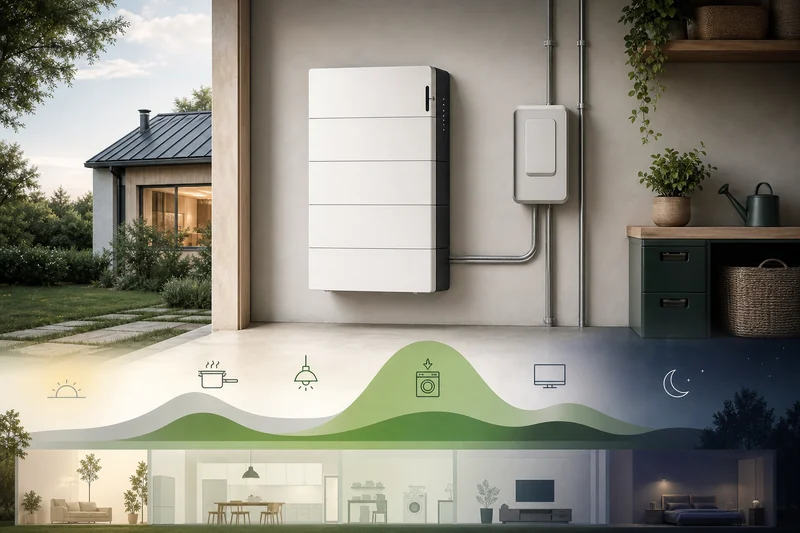

Start with the problem the battery is meant to solve
A battery may be considered to use more solar electricity later, reduce grid imports at expensive times, support a particular tariff strategy, prepare for future electric loads, or provide limited backup where designed for that purpose. Each objective changes the assessment.
What makes the case stronger
- Regular surplus solar generation.
- Electricity usage after solar generation drops.
- A time-of-use tariff with meaningful price difference, where suitable.
- Future EV, heat pump or higher electrical demand.
- A battery size matched to actual usage, not oversized for appearance.
What weakens the case
- Limited solar surplus.
- Very low evening electricity use.
- Flat tariffs with little price difference.
- Optimistic assumptions about daily cycling.
- Backup expectations that the design does not support.
- Short ownership horizon or uncertain property plans.
What should be modelled
A sensible appraisal should model the base solar system first and then show what the battery changes. That helps separate the value of the panels from the additional value of storage.
- Extra self-consumption expected.
- Grid charging assumptions, if any.
- Export income forgone by storing instead of exporting.
- Battery cost, warranty, usable capacity and degradation assumptions.
Before the numbers matter, there has to be somewhere to put it. Where can a home battery be installed covers the placement rules, which for some properties decide the question on their own.
There is one more question that changes the arithmetic before any of these: whether the equipment can join a supplier controlled tariff at all. Does your inverter talk to your energy supplier covers what to ask and who to ask.
Questions to ask before deciding
- What is the battery expected to achieve?
- How often is it expected to charge and discharge?
- What happens in winter when solar generation is lower?
- What happens if tariff terms change?
Information and source control
Information correct as of: 17 July 2026
Sources available on request or reviewed during consultation.