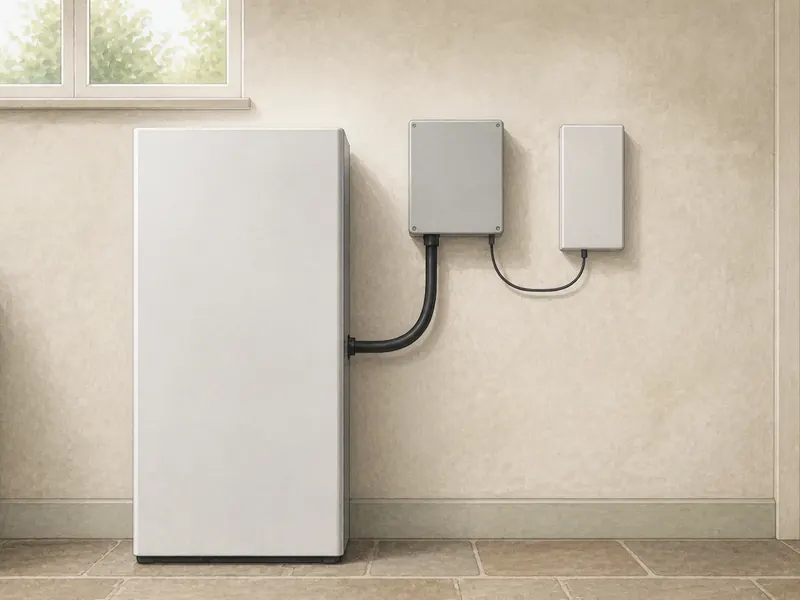
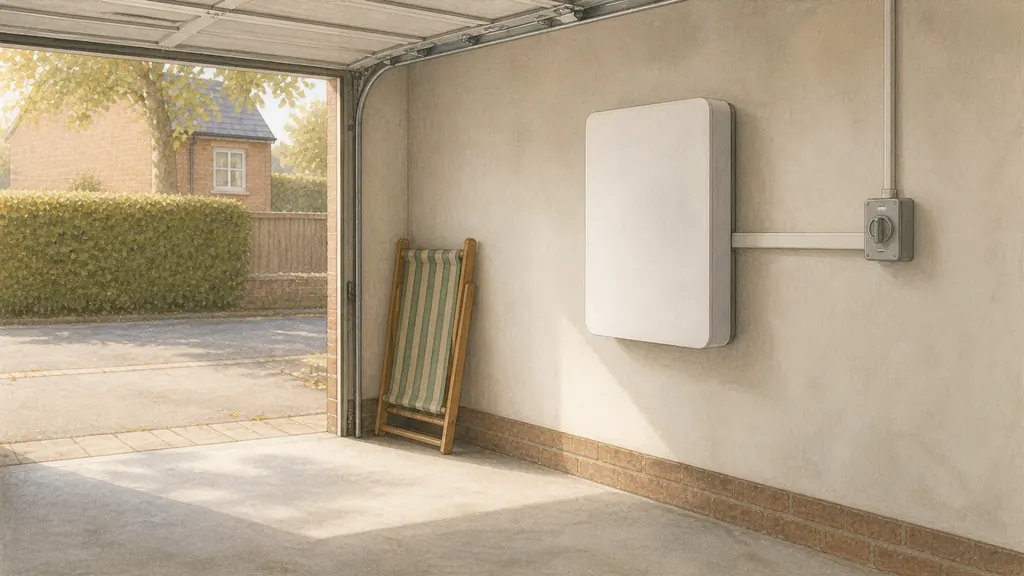
What a home battery does
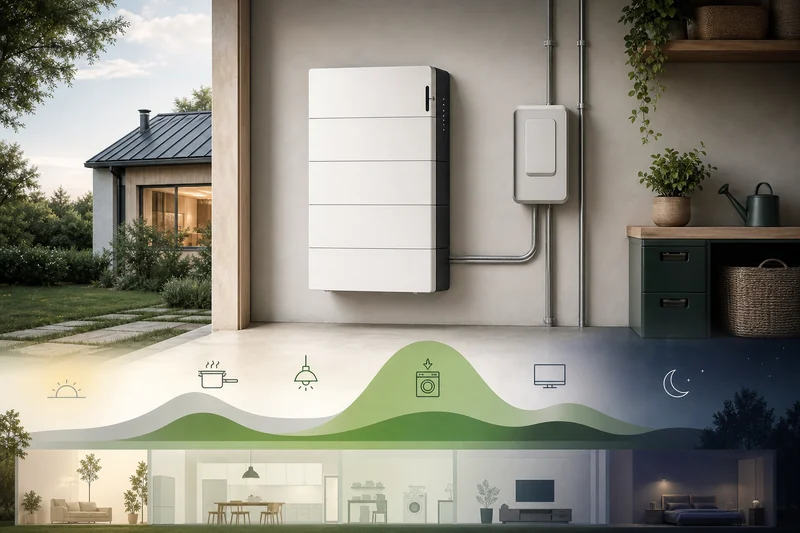
Energy Saving Trust explains that battery storage lets customers store excess electricity generated by solar panels and use it later. Some batteries can also be charged from the grid when electricity is cheaper under smart time-of-use tariffs.
The basic flow of electricity
In a solar-and-battery system, the home may use solar electricity first, charge the battery with surplus generation, export when the battery is full, or import from the grid when more electricity is needed. The exact operating logic depends on the equipment, settings and tariff strategy.
Key terms in plain English
- Capacity, usually in kWh, describes how much energy the battery can store.
- Power rating, usually in kW, describes how quickly the battery can charge or discharge.
- Usable capacity is the portion of the stated capacity available for normal operation.
- Round-trip efficiency reflects losses between charging and later use.
- Warranty terms describe time, cycles, throughput and conditions.
What a battery cannot automatically do
A battery does not create electricity. It stores energy that has been generated by solar panels or imported from the grid. Backup power also needs specific system design; a battery being present does not automatically mean a whole home will operate during a power cut.
One of those limits deserves its own explanation, because it is the most commonly misunderstood thing about home batteries: whether the lights stay on in a power cut. Island mode and backup circuits sets out what backup actually requires.
Questions to ask before deciding
- How much electricity is used after solar generation falls?
- Will the battery charge from solar only, the grid, or both?
- Is backup power required, and what circuits should be supported?
- What warranty and operating limits apply?
Information and source control
Information correct as of: 17 July 2026
Sources available on request or reviewed during consultation.