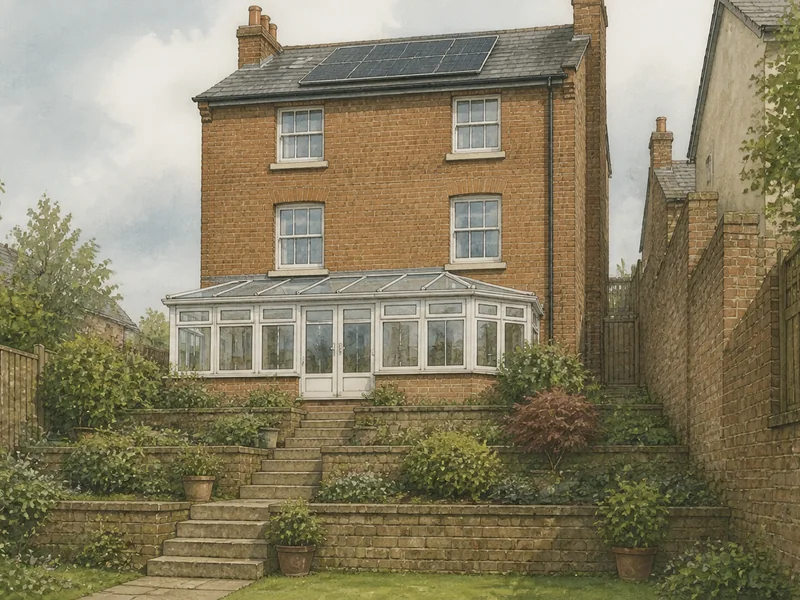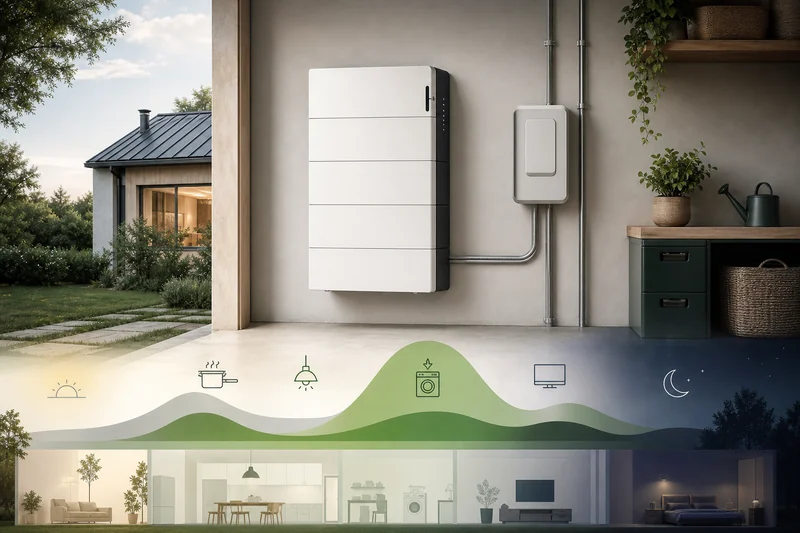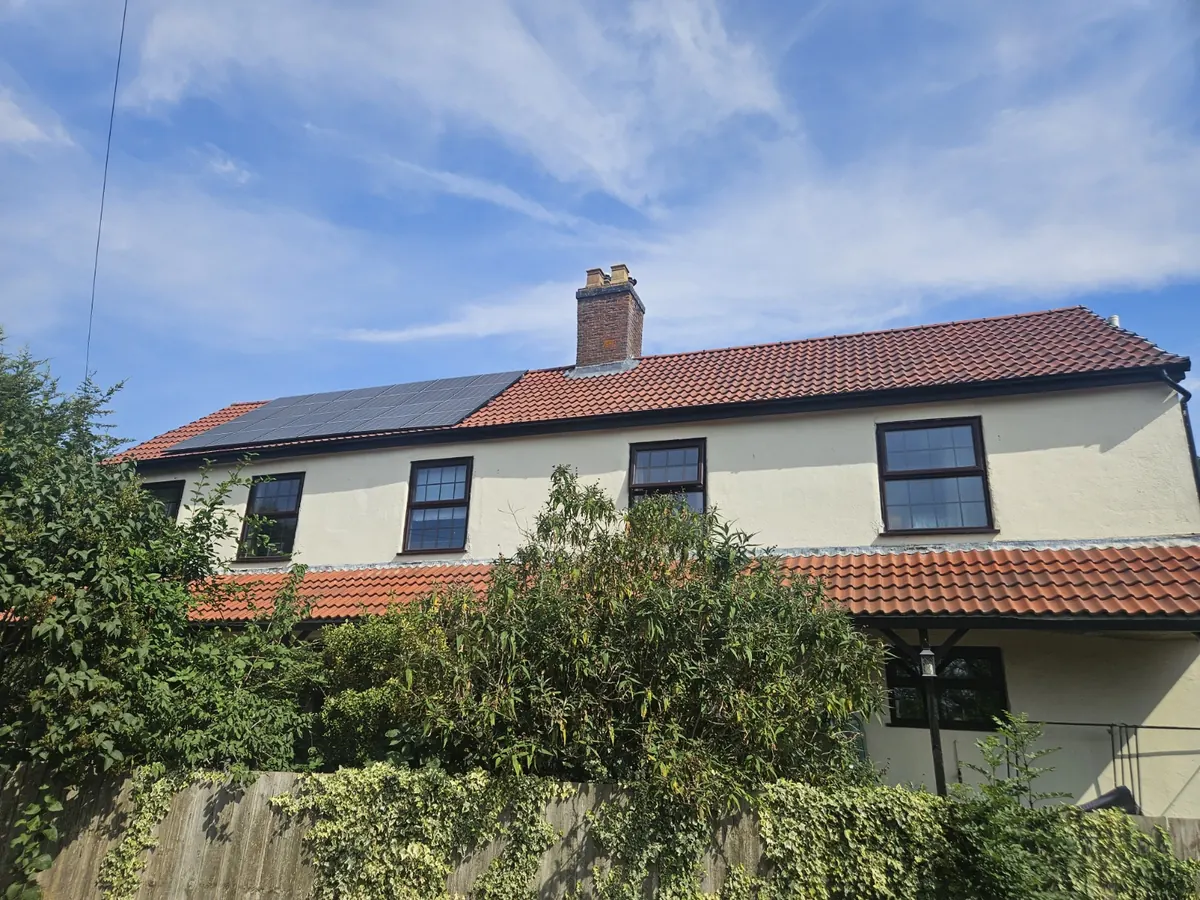
The power goes off and you have solar panels and a battery on the wall. Naturally you expect the lights to stay on.
In many homes they do not. The same battery that quietly stores cheap overnight electricity has no way of powering anything once the grid goes down, because it was never wired to. That comes as an unwelcome surprise, and it is usually discovered during the outage rather than before it.
Why most battery systems switch off with everything else
A grid-connected battery is required, for safety, to detect when the grid supply is lost and disconnect itself. This is called anti-islanding, or loss-of-mains protection.
The reason is straightforward and worth understanding, because it explains why the default cannot simply be changed. Engineers working to restore power on a line they believe is dead must not find electricity being pushed back into it from someone’s solar panels or battery. So the standard behaviour of a grid-connected inverter is to shut down when the grid fails.
That is not a fault. It is the system doing exactly what it is required to do.
What island mode changes
Island mode is the feature that allows a different outcome. Rather than shutting down, the inverter separates a defined part of your wiring from the grid connection entirely, then supplies that separated part from the battery. Because it is now physically isolated from the network, it is safe for the battery to keep it energised.
Island mode is not standard on every battery. It usually needs specific additional hardware, and it needs to be designed into the installation rather than bolted on afterwards. A battery bought purely to shave bills on a time-of-use tariff will not necessarily include it.
Whole-house backup is not the goal you think it is
Here is the part most people get wrong.
The instinct is to want the whole house backed up. But whole-house backup is limited by the inverter’s output rating and the battery’s stored capacity, not by how much you are willing to spend. Ask a battery to run an electric shower, an oven, an immersion heater and an EV charger and it will empty itself in a fraction of the time, if it can supply that load at all.
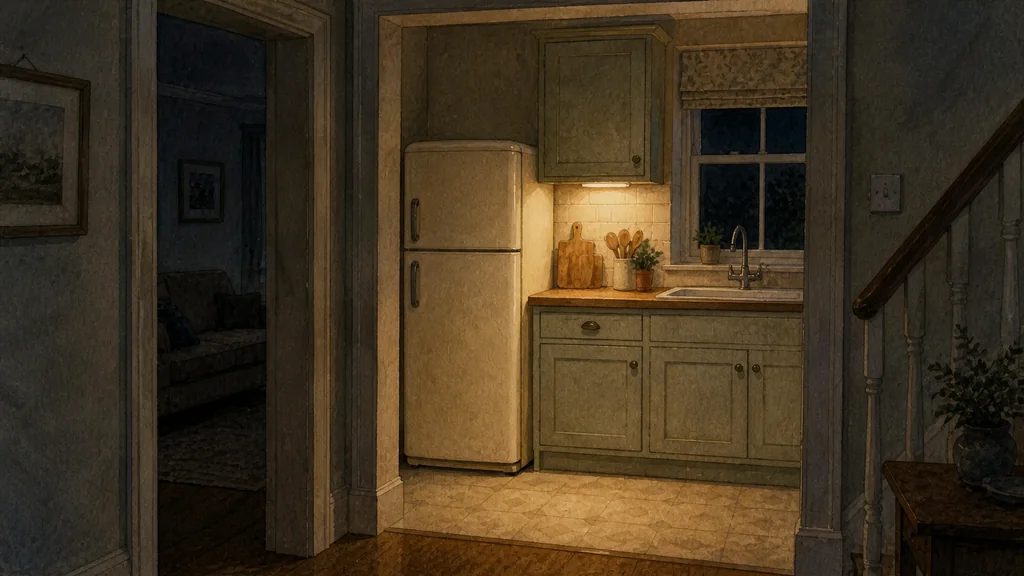
A fridge freezer riding out a six hour cut is worth far more to most households than the whole house running for twenty minutes.
That is why most installations back up a defined subset of circuits, wired through their own board. Which circuits are included is a design decision made at installation, not a fixed standard. The high-draw circuits are usually deliberately excluded, and that exclusion is what makes the backup useful rather than a limitation of it.
What a well-chosen backup circuit looks like
For most homes, the things that genuinely matter during an outage are modest:
- The freezer, and the fridge, so a long cut does not cost you the contents
- A lighting circuit, ideally kitchen and hall rather than the whole house
- The boiler control, so heating and hot water still work if you have gas
- One or two sockets for phones, a laptop, and the broadband router
That is a small, sane load a battery can hold for hours rather than minutes. Add an electric hob to it and you have spent the same stored energy in a few minutes of cooking.
If you work from home, add the desk. If someone in the house depends on medical equipment, that goes first and should be stated explicitly, not assumed.
Why this is a decision to make now, not later
Separating those circuits onto their own backup board is electrical work. Done as part of the original installation, while the electrician is already there and the consumer unit is already open, it is a modest addition to the job.
Done afterwards, it is a separate visit, separate labour, and possibly further work on the consumer unit. The same pattern applies here as with scaffolding on a solar install: the work is far cheaper bundled into a job already happening than commissioned on its own later.
So even if backup power is not your priority today, it is worth asking what it would add to the quote now. The answer is often small enough to change your mind.
What determines how long it actually lasts
Three things: how full the battery is when the cut starts, how much the backed-up circuits are drawing, and whether the system can recharge from your solar panels while the grid is down.
That last one catches people out. Not every hybrid inverter is configured to recharge from solar during an outage. A battery that would ordinarily refill for free on a sunny afternoon may sit unable to top itself up, purely because of how it was set up. In a multi-day outage that is the difference between a system that carries you and one that does not.
There is no single figure that applies across systems. It depends on your battery capacity, your inverter’s rated output, which circuits were chosen, and the configuration used at installation.
What to ask before you sign
- Does this system include island mode at all, or does it shut down in a power cut?
- Which specific circuits would be backed up, and can I see that list in writing?
- What is the backup output rating, and what happens if I exceed it?
- Can the system recharge from the solar panels while the grid is down?
- What would it cost to add backup circuits now, as part of this job, versus later as a separate visit?
If you already have a battery, an existing system can sometimes be adapted to add backup capability. Whether yours can is a question for a qualified electrician assessing your specific hardware, not something to assume in either direction.
The short version
Having a battery and having power in an outage are related but separate things. One does not give you the other.
If outage protection matters to you, say so explicitly and have it confirmed in writing as part of the specification. And resist the urge to back up everything, because a small, well-chosen circuit that lasts all evening beats a whole house that lasts twenty minutes.
What Eco Connect does, and does not, do here
We give independent advice on renewable energy decisions, including whether backup power is worth specifying for your household. We do not install and we have nothing to sell you here. Installation is carried out by your chosen installer.