The Feed-in Tariff closed to new applicants on 1 April 2019. If you were accredited before that, you hold a rate that no new installation can obtain, index linked, for a term that typically runs twenty years from your eligibility date. It is reasonable to be protective of it.
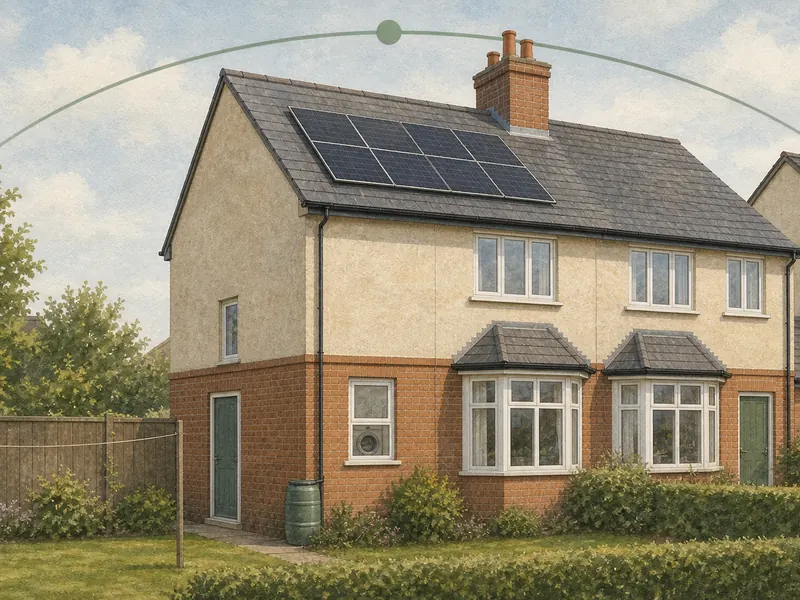
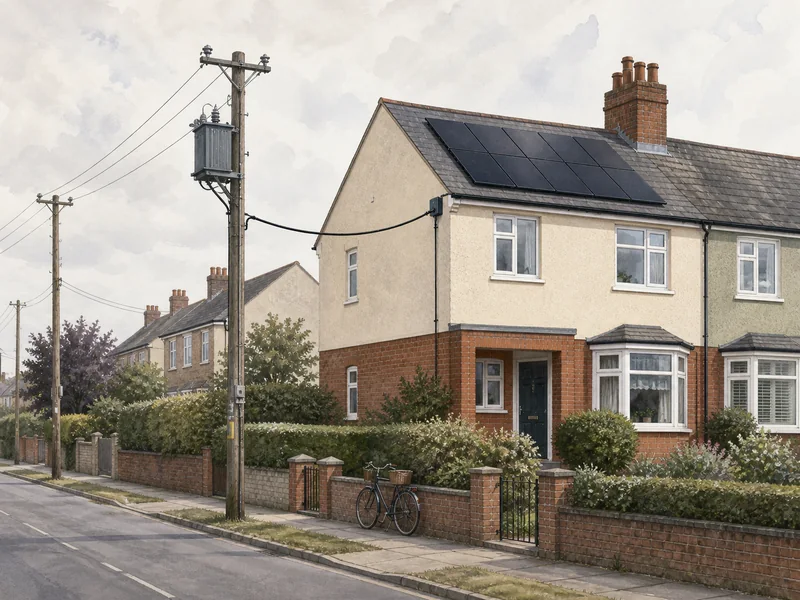
It is also why a lot of people with eight or ten panels and a south-facing roof with room for twenty leave that roof half empty. The assumption is that touching the system risks the tariff. That assumption is wrong, and it has probably cost people more than any mistake they were trying to avoid.
Your original tariff is not at risk
Ofgem’s guidance for FIT generators is direct about this. Where capacity is added to an accredited installation, the original installation’s eligibility date, tariff and eligibility period are not affected.
So adding panels does not re-rate your existing system, does not restart your term, and does not move you onto today’s rates. The system you accredited stays exactly as it is.
Source: Ofgem, “Feed-in Tariffs (FIT) Guidance for Generators”, version 18, section 3.15. Checked 15 September 2026, https://www.ofgem.gov.uk/guidance/feed-tariffs-guidance-fit-generators
The new panels get nothing from FIT
That is the other half of it, and it is equally firm. Any extension to an accredited FIT installation commissioned on or after 15 January 2016 is not eligible for FIT support, for generation or for export. The scheme has been closed to new applications since April 2019 and no new capacity can be accredited to it.
New capacity therefore earns through the Smart Export Guarantee, which is a different arrangement at a different rate, or it earns nothing at all beyond what it saves you by displacing electricity you would otherwise have bought.
For most households the saving from self-consumption is the larger number anyway. But go in knowing that the new panels are not joining the old deal.
Source: Ofgem, “Feed-in Tariffs (FIT) Guidance for Generators”, version 18, sections 3.13 and 3.16. Checked 15 September 2026.
Here is the part that actually costs money
This is the reason this page exists, and it is a metering question rather than a solar one.
If the new panels sit behind your existing generation meter and cannot be metered separately, Ofgem requires the readings to be pro-rated according to total installed capacity. You are then paid your legacy rate on a proportion of your generation rather than on all of it.
Ofgem’s own worked example makes the shape of it clear: a 40kW installation extended by 10kW is paid for 80% of generation at the original tariff rate.
| How the extension is metered | What happens to the legacy tariff |
|---|---|
| Separate generation metering for the new capacity | The original array keeps 100% of its FIT generation payments |
| Shared generation meter, no separate metering possible | FIT generation payments pro-rated by total installed capacity |
Read that table twice before you accept a quotation. An installer pricing a straightforward extension has no particular reason to raise it, because it is not their problem and it does not appear on their paperwork. It is entirely yours.
The practical consequence: ask for the extension to be separately metered, and price that in from the start. Retrofitting metering to fix this afterwards is a second visit and a second bill.
Source: Ofgem, “Feed-in Tariffs (FIT) Guidance for Generators”, version 18, section 3.18. Checked 15 September 2026.
Export is a separate decision, and it is a real one
Many domestic FIT installations are on deemed export, where you are paid for an assumed 50% of generation rather than a measured amount. Deeming applies at or below 30kW where there is no export meter.
Adding capacity does not change that assumption on its own, which is where people quietly lose out. Where an ineligible extension shares a meter, Ofgem sets out two routes: pro-rate the FIT export payments across total capacity, or opt out of FIT export altogether and claim the Smart Export Guarantee instead.
That is a genuine calculation, not a formality. Opting out of FIT export means giving up a deemed payment tied to your legacy arrangement in exchange for a metered payment at current SEG rates on everything you actually export. Whether that is better depends on your export tariff, how much you really export once the new panels are on, and whether your consumption has changed since the system went in.
Work it out with numbers before you choose. Do not let it be decided by whoever fills in the form.
Source: Ofgem, “Feed-in Tariffs (FIT) Guidance for Generators”, version 18, section 6.3. Checked 15 September 2026.
The things that catch people out
Your connection agreement. Additional capacity is a new question for your network operator. Whether it falls under G98 or needs a G99 application depends on the total, not on the increment. How G98, G99 and G100 actually work covers the routes, and the export limit you already have may be the thing that caps how many panels are worth fitting at all.
MCS on the new array. Smart Export Guarantee suppliers require MCS certification on the installation. An extension fitted outside that has no route to export payment.
Your inverter. The existing inverter may not have the headroom for the additional array, and replacing it raises its own questions about what is metered where.
When your term actually ends. A 2011 installation on a twenty year term is closer to the end of it than most owners realise. That changes the arithmetic on spending money to protect the rate.
Before anyone touches the roof
Put this in writing to your FIT licensee, which is the supplier who pays you, and get their answer in writing:
- You intend to add capacity, stating how much
- You intend to meter the new capacity separately, or you cannot and want to know the pro-rating position
- You want confirmation that your existing tariff, eligibility date and term are unaffected
- You want their position on export: pro-rated FIT export, or opting out in favour of SEG
This is not us being cautious for the sake of it. Your supplier administers the payments and their interpretation is the one that lands in your bank account. An email trail costs nothing and settles it before there is anything to argue about.
Where our knowledge ends
Eco Connect is an independent advisory business. We do not install, we cannot alter your FIT arrangement, and we cannot tell you what your licensee will decide about your specific installation. Scheme rules change, and the guidance referenced here is dated and linked so you can check it against the current version rather than take ours on trust.
What we can do is work through the arithmetic with you before you commit, and make sure the metering question is settled at quotation stage rather than discovered on your first statement afterwards.
Information and source control
Information correct as of: 15 September 2026.
Every rule on this page is taken from Ofgem’s Feed-in Tariffs guidance for generators, version 18, with the section number given. Check the source before you rely on it, including ours.
- Ofgem, Feed-in Tariffs guidance for generators: https://www.ofgem.gov.uk/guidance/feed-tariffs-guidance-fit-generators
- Ofgem, Feed-in Tariffs scheme: https://www.ofgem.gov.uk/environmental-and-social-schemes/feed-tariffs-fit
- Ofgem, Smart Export Guarantee: https://www.ofgem.gov.uk/environmental-and-social-schemes/smart-export-guarantee-seg