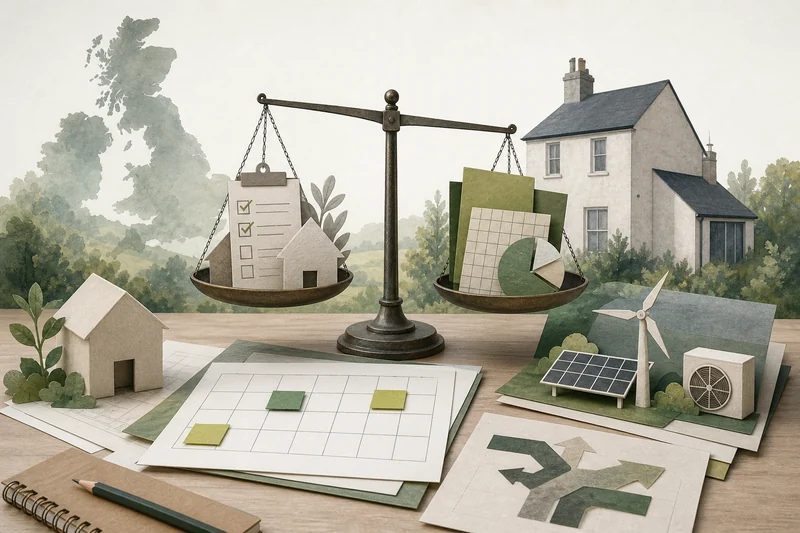
PV panels and mounting
Panels and their mounting need to suit the roof or land, its condition, access and exposure to shade.
Solar PV
Understand suitability, roof or land considerations, energy use, timing, storage and next steps.
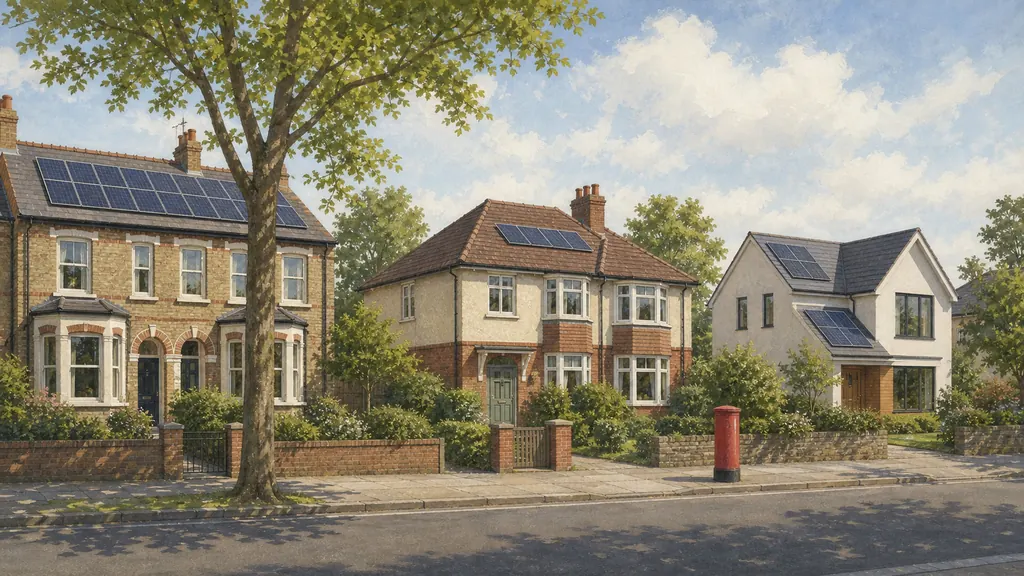
Solar photovoltaic (PV) panels turn daylight into electricity for use at your property. They are different from solar thermal panels, which heat water. A suitable system is designed around the building, electricity use and the way you plan to use energy over time.
A typical Solar PV system makes electricity during daylight, converts it into a form your property can use and records what is generated. The practical value depends on when that generation is available and how it fits with your demand.
PV cells generate direct-current electricity whenever there is usable daylight. Output changes with weather, season, orientation and shading.
An inverter converts the electricity into alternating current for the property. The right arrangement depends on the system design.
Electricity can support demand at the time it is being generated, subject to the property’s wiring, controls and current use.
A battery may store some electricity for later. Any electricity not used or stored may be exported, depending on the connection and agreed arrangements.
Panels and their mounting need to suit the roof or land, its condition, access and exposure to shade.
The inverter, isolators and electrical protection allow the system to operate safely as part of the property’s electrical installation.
Monitoring helps explain generation and use. A battery can be considered where it supports the wider energy plan.
Solar PV creates electricity where it is used, helping you understand the role daylight generation could play in your energy mix.
It can be planned alongside storage, EV charging or electric heating rather than considered as an isolated product.
System monitoring can make patterns of generation and demand easier to discuss and manage over time.
Panels do not need direct sunshine to generate, but production varies. A design should not assume the same output every hour or season.
Roof condition, shading, orientation, access, land use and electrical infrastructure can all affect what is realistic.
A system needs to be considered around when electricity is used, not only around the size of the available roof or land.
Owners planning to stay in a property, farms and businesses with suitable space, or anyone exploring a broader electricity strategy may wish to assess it.
How and when do you use electricity? What condition is the roof or site in? Are your plans likely to change with an EV, battery or electric heating?
Starting with panel count, overlooking shade or roof condition, or assuming solar alone will meet every electricity need can lead to the wrong decision.
A site assessment is needed before deciding on location, design, connection requirements or whether installation is the right next step.
Storage can be explored where using some generated electricity later is more relevant than using it only during daylight.
ExploreCharging patterns can be planned around available generation, vehicles, parking time and the property’s electrical capacity.
ExploreSolar PV may form part of a wider move toward electric heating, but heating demand and property readiness need their own assessment.
ExploreOur role is to help you make a considered decision before you commit to a product or delivery route.
Eco Connect begins with your building or site, current use, future plans and the questions behind the project.
We help identify the information needed around the property, usage, constraints and how Solar PV could fit with other technologies.
You receive practical guidance on the options and timing, including when a phased plan or no immediate installation is the sensible route.
Where you choose to proceed, Eco Connect can coordinate with trusted specialists for expert delivery.
These answers are general guidance. A property or site assessment is needed before making a technology decision.
No. PV panels generate from daylight, but output varies with season, weather, orientation and shading. A property-specific assessment is needed before drawing conclusions about suitability.
Not necessarily. Generation and demand do not always happen at the same time, and both vary through the year. Solar should be considered as part of the wider energy picture.
It may be possible, but the best approach depends on the existing system, electrical arrangement, future needs and the reason storage is being considered.
Yes. Visible space is only one factor. Condition, structure, shading, access, electrical connection and future plans all need to be understood.
Start with a free renewable consultation. We will listen to what you want to achieve, ask a few practical questions and help identify the most useful next step.