Why this topic matters
Battery storage is not just a box of energy. How it connects to the rest of the system affects compatibility, installation route, monitoring, conversion losses, grid connection considerations and future flexibility.
AC-coupled in plain English
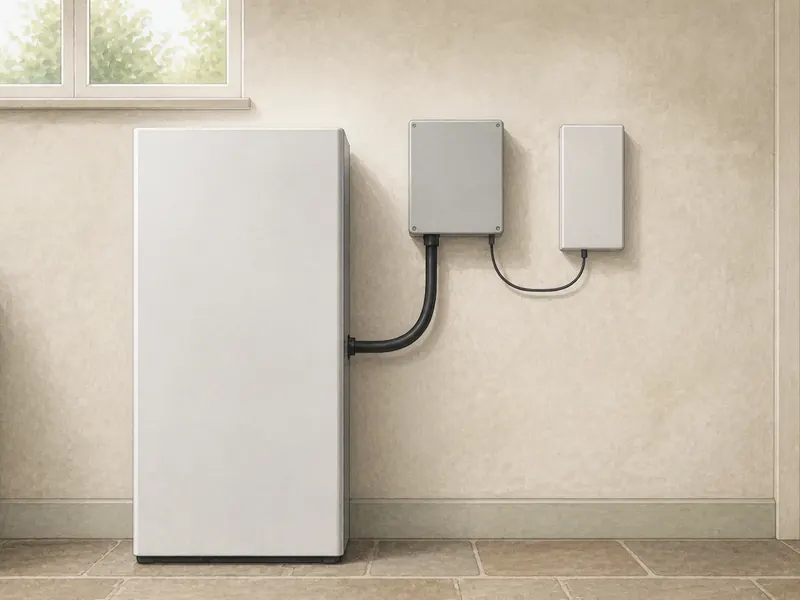
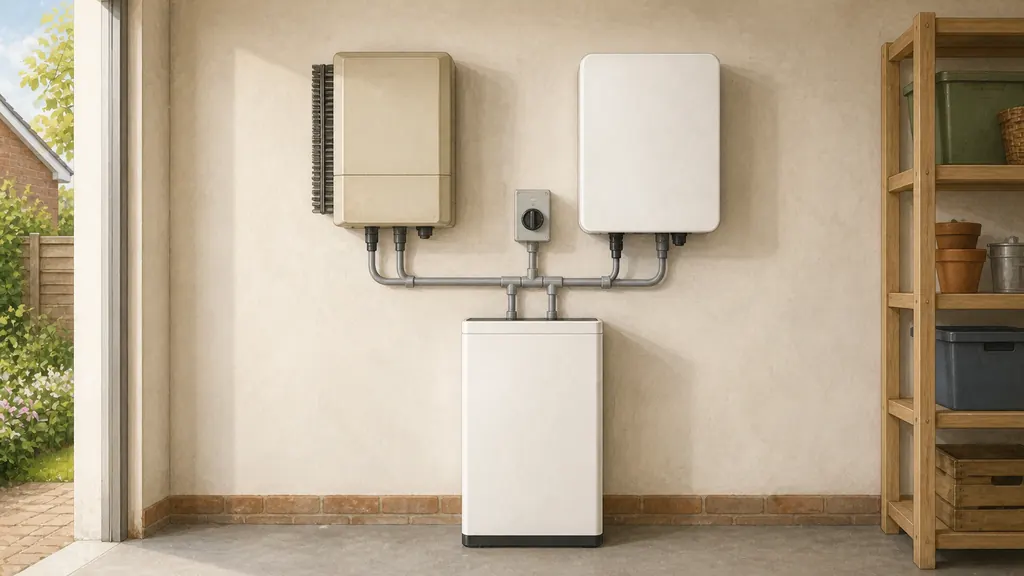
An AC-coupled battery typically uses its own battery inverter connected to the property’s AC electrical system. This can be useful where solar already exists because the battery may be added without replacing the solar inverter, subject to compatibility and site checks.
- Often considered for retrofits.
- Can be comparatively independent of the existing solar inverter.
- May involve additional conversion steps.
- Grid connection and electrical implications still need checking.
DC-coupled or hybrid in plain English
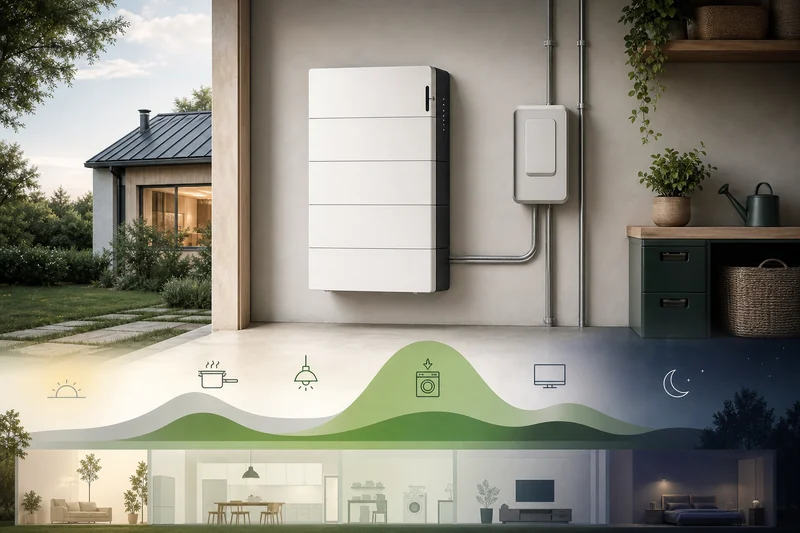
A DC-coupled or hybrid approach usually integrates the battery more directly with the solar PV side and a hybrid inverter. This may suit a new solar-and-battery installation where the whole system is designed together from the start.
- Can offer a joined-up new-system design.
- Compatibility depends on chosen equipment.
- Future expansion should be considered early.
- May be less straightforward if solar equipment already exists.
The right question
The question is not which label is best. The question is which design works for the property, existing equipment, future plans, warranty, installer competence and the customer’s operating expectations.
Questions to ask before deciding
- Is this a retrofit or a new installation?
- What inverter is already installed, if any?
- Are solar and battery warranties affected by the design?
- Does the chosen design support monitoring, tariffs and future expansion?
Information and source control
Information correct as of: 17 July 2026
Sources available on request or reviewed during consultation.