Search for the cost of an air source heat pump and you will get a single number, usually somewhere near thirteen thousand pounds, repeated across dozens of sites.
We are not going to publish that figure. We could not verify it against a primary source we are confident in, and the only place it appears to originate is a dashboard we could not read for ourselves. Repeating an unverified number with a hedge in front of it is still repeating it.
What we can tell you is what moves the number, which is more useful anyway, because the spread between two honest quotations for the same house is smaller than the spread between two different houses.
The one fixed part
The Boiler Upgrade Scheme grant is a fixed amount, set by government rather than by your installer, and it comes off the invoice. The current amounts and eligibility rules are in the grant guide.
Everything below the grant line is where quotations differ.
What moves the rest
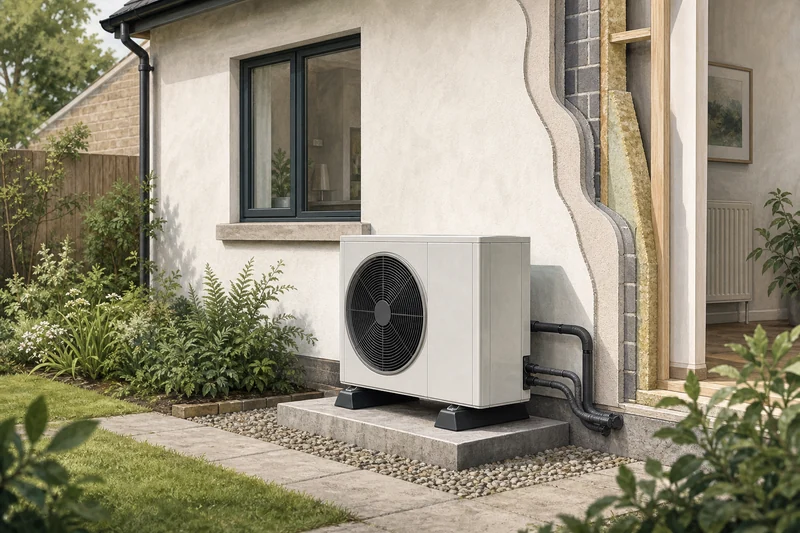
Heat demand, not floor area. The system is sized to the heat the building loses, which is a function of construction, insulation, glazing and air tightness rather than square metres. Two identical-looking houses on the same street can need different machines.
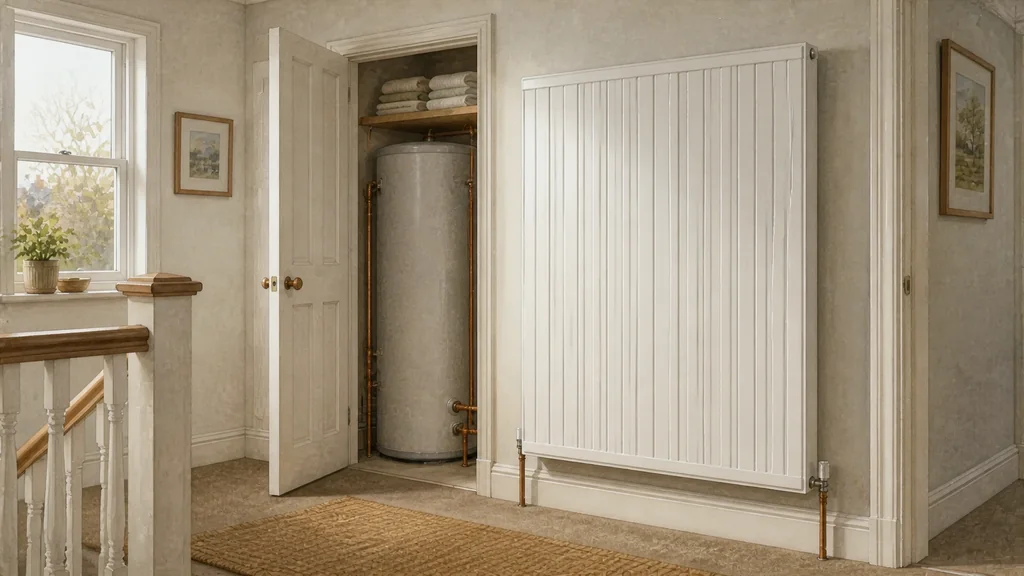
Emitters. A heat pump runs at a lower flow temperature than a boiler, so the radiators have to give up the same heat from cooler water, which usually means larger ones. Whether your existing radiators are adequate is the single largest swing factor in a domestic quotation, and it is decided by a room by room calculation rather than by inspection.
Hot water cylinder. A heat pump heats water at a lower temperature, so it needs a cylinder suited to that, sized for the household. If there is no cylinder, or the existing one is a combi arrangement with nowhere to put one, that is both cost and space.
Pipework. Lower temperatures move more water for the same heat. Undersized primary pipework becomes a bottleneck, and replacing it is disruptive rather than merely expensive.
Controls and metering. The scheme and good practice both expect the system to be controllable and monitorable in ways an old boiler installation is not.
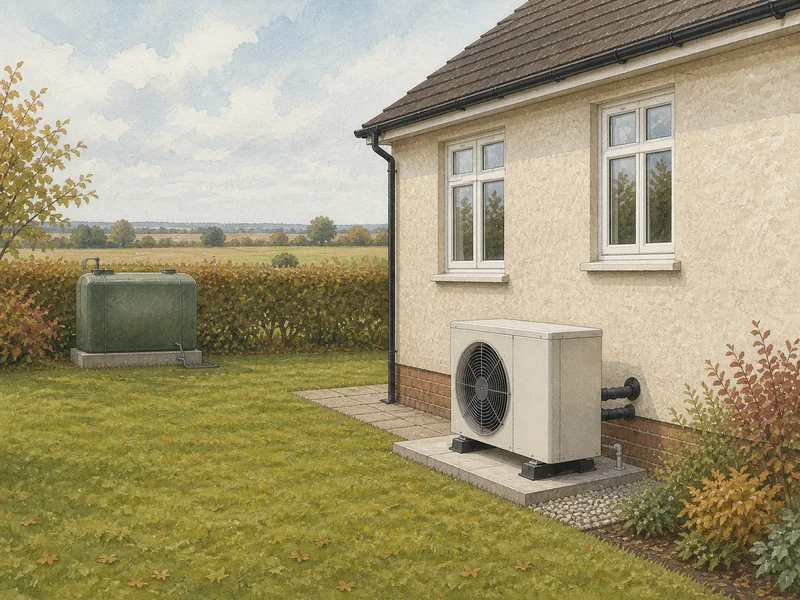
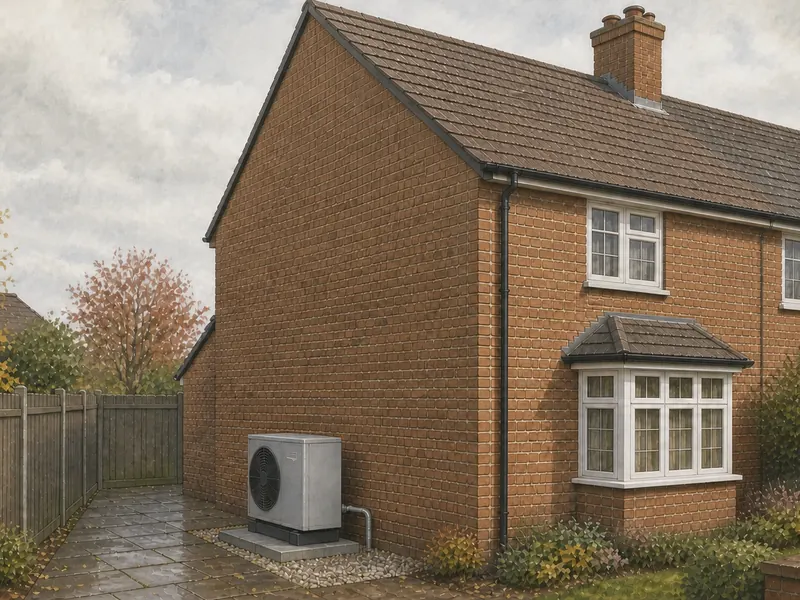
Siting and access. The outdoor unit needs a position with airflow, drainage for condensate, an acceptable noise position relative to boundaries and neighbours, and a cable and pipe route back to the plant. A straightforward position and an awkward one are different jobs.
Electrical supply. GOV.UK’s position is that most heat pumps can be installed without changes to your electricity supply. If yours is one of the exceptions, that is a separate cost and a separate lead time, and it is a question to ask early rather than discover late.
Making good. Lifted floors, boxed pipework and redecoration after emitter changes are real costs that appear in some quotations and not in others, which is one reason two totals are hard to compare.
How to read two quotations
The total is not the test. Whether the total can be taken apart is the test.
Ask for the heat loss calculation, not just its conclusion. Ask which radiators are being changed and why. Ask whether the cylinder is included, what size, and where it goes. Ask what happens to the floor and the decoration. Ask what has been assumed about the electrical supply and whether it has been checked.
A quotation that answers those is comparable with another quotation that answers those. A single figure for the job is not comparable with anything.
The largest single variable in that list is usually the emitters. Will you need new radiators for a heat pump explains how the answer is calculated, and why it is a room-by-room figure rather than a house-wide one.
Why we will not give you a number
Where a figure genuinely depends on your property and we cannot know it, we say so rather than publish an average and call it an estimate. A survey from an MCS certified installer is the reliable way to get a price for your own home, and getting more than one is worth the time it costs.
Information correct as of 26 August 2026. This is general information, not financial, legal or technical advice, and not a substitute for a property-specific assessment.