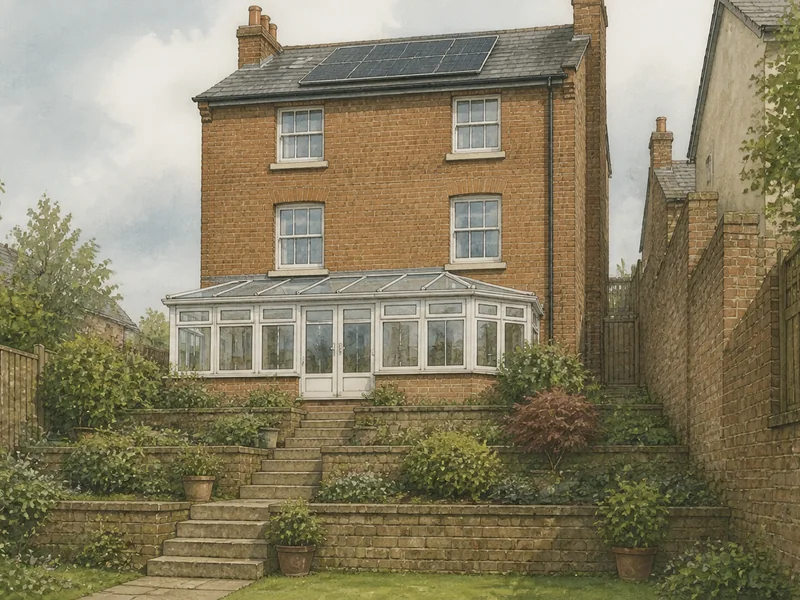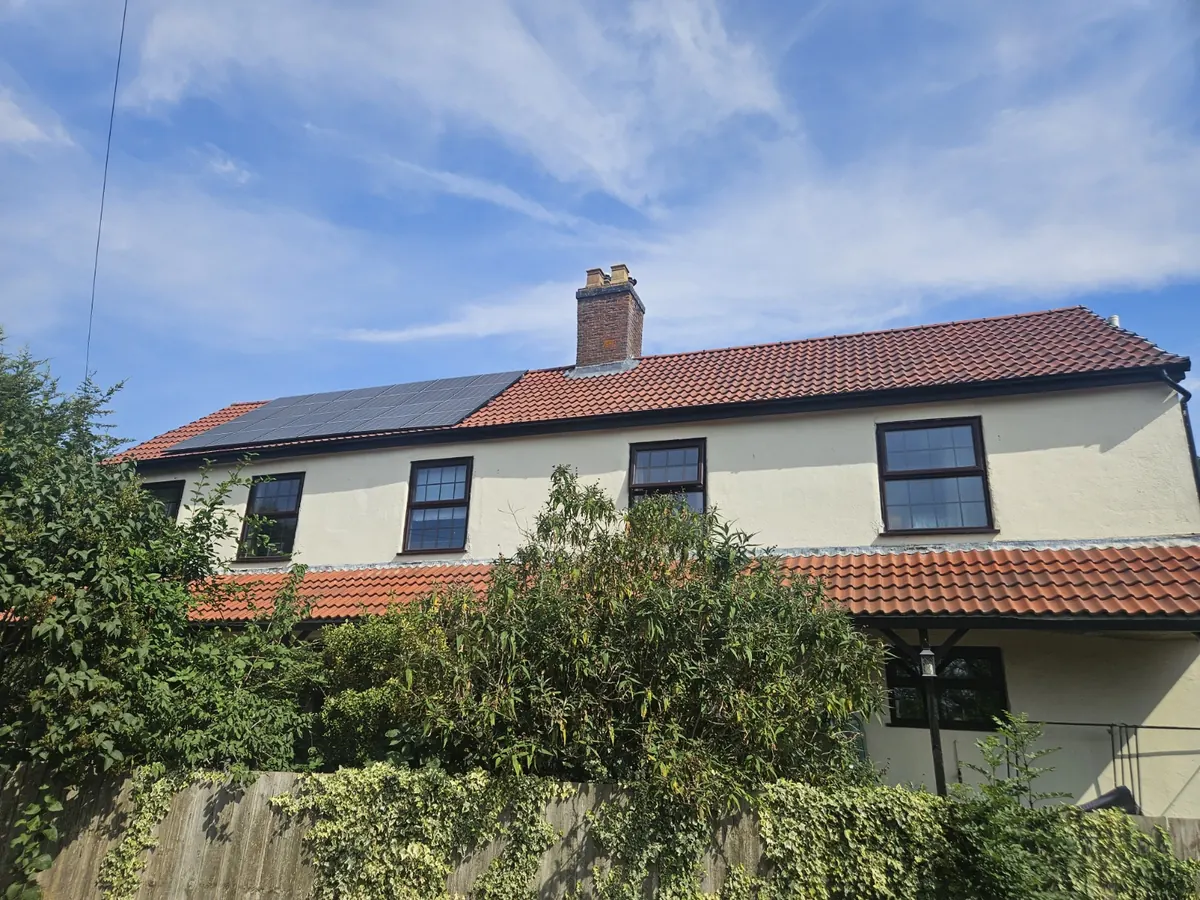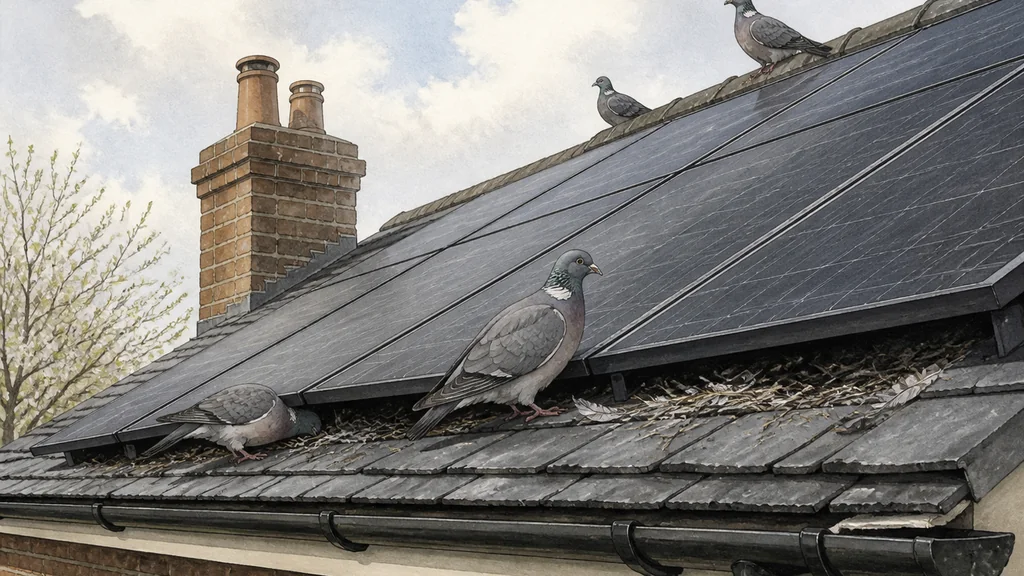
Solar panels sit a few inches proud of the roof. That gap is warm, dry, sheltered and hidden from predators.
To a pigeon it is close to ideal. Which is why, a year or two after installation, some owners find they have acquired tenants: scratching and cooing overhead, mess down the roof and in the guttering, and no obvious idea what to do about it.
The frustrating part is that preventing it is cheap and straightforward, while fixing it afterwards is neither. The decision point is at quote stage, and almost nobody raises it there.
What the birds actually cost you
Nesting material and droppings under an array cause a set of related problems. Debris beneath the panels obstructs the airflow the modules rely on to stay cool. Fouling washes down into the guttering and blocks it. Nesting material and droppings sit against the cabling that runs underneath the array, and trade guidance treats that as a source of wear worth taking seriously.
None of this is catastrophic on day one. It is a slow, compounding nuisance that ends in a bill.
Why this is a legal question, not only a maintenance one
This is the part that surprises people, and it is the reason timing matters so much.
Once a nest is being built or is in use, it is protected. Section 1 of the Wildlife and Countryside Act 1981 makes it an offence to take, damage or destroy the nest of any wild bird while that nest is in use or being built.
So if birds have already moved in and are nesting, you cannot simply have the nest cleared out. You wait until the young have fledged and the nest is no longer in use, and only then close the gap.
What the Act does not prevent is blocking access to a potential nest site before any nesting begins. That is the whole practical point:
Proofing an empty gap is a simple job. Removing an established nest is not a job at all, it is a wait.
For that reason the work is best done outside the main nesting season, in autumn or winter, with a check beforehand to confirm nothing is living up there.
Why doing it later costs so much more
The mesh itself is inexpensive. The cost is getting safely onto your roof.
Fitted at the same time as the panels, the access and any working platform are already there and in use. The bird proofing is a modest addition to a job that is already happening.
Retrofitted afterwards, you are paying for roof access all over again, which depending on the height, pitch and layout of your roof can mean a fresh scaffold. That access cost typically dwarfs the materials.
This is the same pattern that governs solar installation cost generally: the expensive part is getting people and equipment safely onto the roof, and that is paid per visit rather than per item of work. Anything you can bundle into a visit that is already happening is dramatically cheaper than commissioning it on its own later.
The question to put in every quote
Whatever else you ask an installer, ask this:
Is bird proofing included in this quote? If not, what would it cost to add now, and what would it cost to retrofit in two years?
The gap between those two figures is usually stark, and it makes the decision for you. It also tells you something useful about the installer: one who has already thought about it, and prices it as an option, is thinking about the whole life of the installation rather than just getting the panels on.
If you are having any other roof or panel work done, ask the same question then. A visit that is already booked is the cheapest visit you will ever get.
What proper bird proofing looks like
The standard method is a mesh fitted around the perimeter of the array, closing the gap while leaving the panels themselves undrilled and unmodified. That last part matters, because drilling or altering panels can affect their warranty.
It is work for someone competent to be on your roof safely and to fit the mesh without disturbing the panel mounting. Ask your chosen installer whether it is something they offer, or whether they can point you to someone who specialises in it.
If you think you already have birds
Look, but look from the ground. Binoculars from the garden tell you what you need to know, and there is no reason to be on the roof yourself.
Late winter or early autumn, outside the main nesting season, is the sensible time to check.
- No nest yet: proofing is a straightforward one-off job, and worth booking before spring.
- Active nest: leave it undisturbed until the young have fledged, then close the gap so the same thing does not happen next year.
What to ask before you sign
- Is bird proofing included in this quote?
- If not, what would it cost to add now, while access is already in place?
- What would the same job cost as a separate visit in two years?
- Does the mesh method you use require any drilling or modification of the panels?
What Eco Connect does, and does not, do here
We give independent advice on renewable energy decisions, including the questions worth putting to an installer before you commit. We do not install, and we do not carry out roof work. Installation and any bird proofing are carried out by your chosen installer.