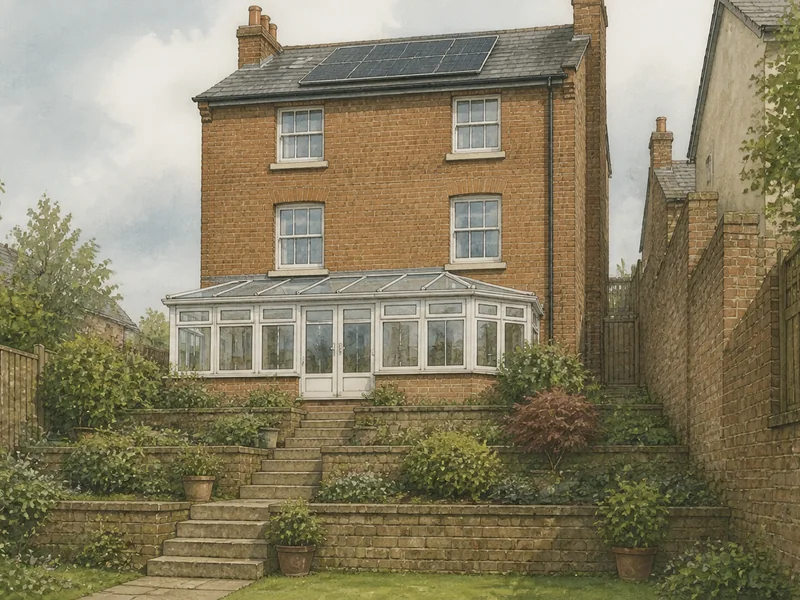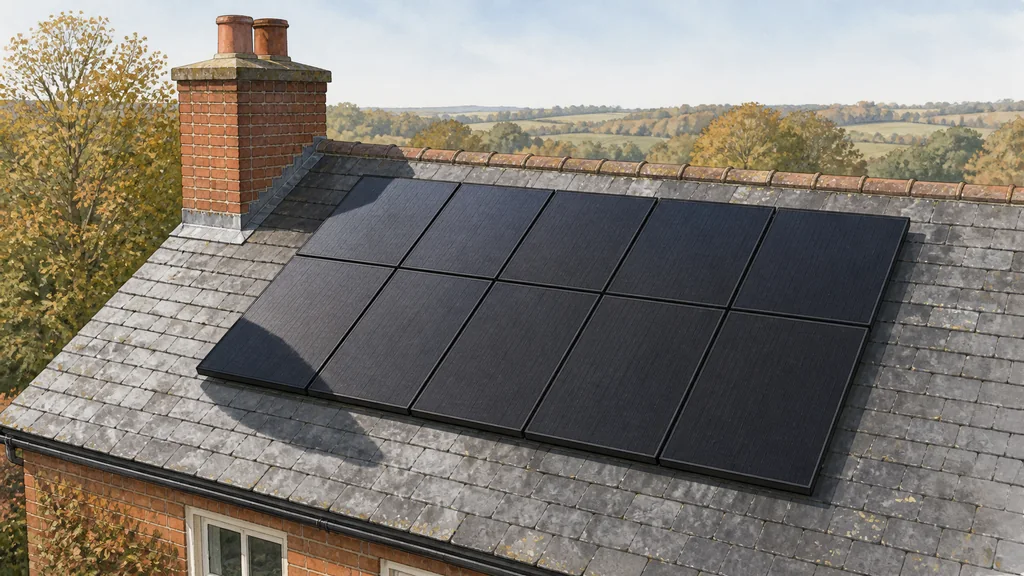
A chimney throws a shadow across one panel for two hours each afternoon. You would expect to lose that panel’s output for two hours.
In many standard installations you lose considerably more than that, and the reason is not the panel. It is how the panels are wired to each other.
Why one weak panel holds back the rest
Most solar systems connect a group of panels in a single electrical loop, called a string, feeding one central inverter. In series wiring, the same current flows through every panel in turn. There is one path, and everything on it shares it.
So a panel that is shaded, dirty, faulty, or simply weaker than its neighbours cannot pass as much current as the rest. And in a series circuit the whole string is limited to what the weakest panel can carry, not to the average.
One underperforming panel therefore drags down every other panel wired alongside it.
Panels do include bypass diodes, small components that give current a route around a badly shaded or faulty cell group rather than forcing it through. These protect the panel and recover some of the loss. They do not remove the string-level effect. A weak panel still acts as a drag on its neighbours.
It is not always shade
A panel can underperform for reasons that have nothing to do with a fault:
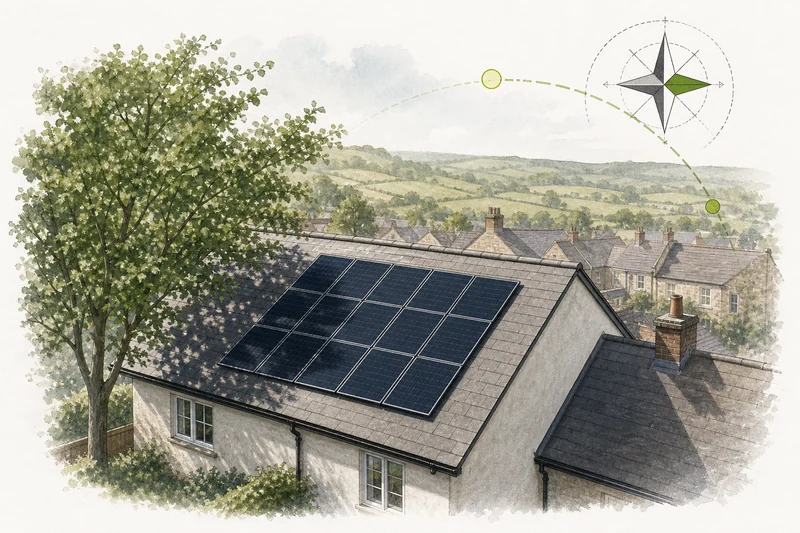
- Partial shading from a chimney, aerial, dormer, roof vent, or a neighbour’s tree, moving across the roof through the day and through the seasons
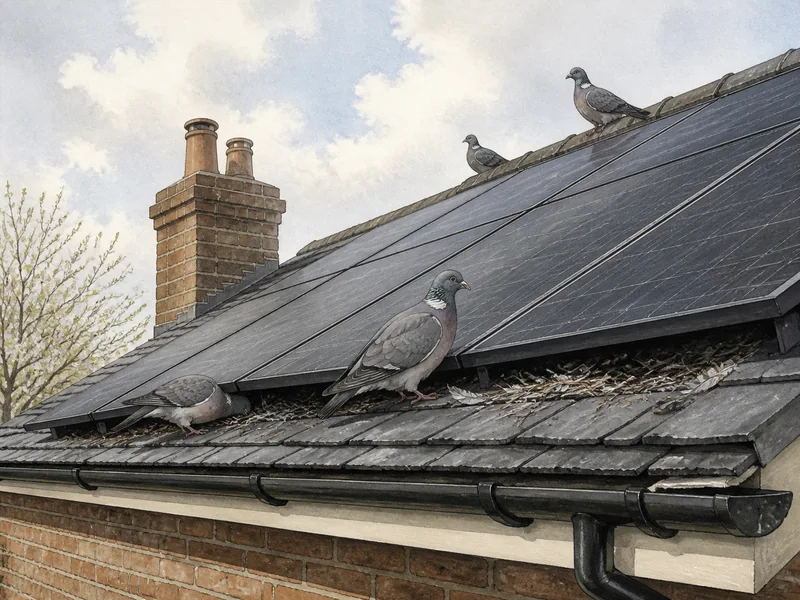
- Uneven soiling, where bird mess, moss or leaf debris settles more heavily on some panels than others
- Different pitch or orientation, where an array is split across more than one roof face
- Ageing or a developing fault in a single unit
Any of these will hold back a string that is otherwise performing perfectly well.
What optimisers and microinverters actually do
A power optimiser is a small unit fitted to each panel that manages that panel’s output individually before it joins the string. Direct current still goes to a shared central inverter, but each panel is no longer forced to match the current of its neighbours. A weak panel is contained to its own reduced output.
A microinverter goes further, converting to alternating current at each panel rather than sending DC to a shared inverter at all. Each panel operates independently from the point of generation.
Both solve the same problem. Which suits a given roof is a design question.
The benefit nobody leads with
The performance argument gets all the attention, but there is a second benefit that is arguably worth more over twenty years.
Panel-level electronics report each panel’s output individually.
Without that, a failing panel is invisible. Your total generation drifts down a few percent and you have no way of knowing whether that is weather, seasons, soiling, or a module quietly dying. Most owners never notice, because there is nothing to notice against.
With per-panel monitoring, one panel underperforming its neighbours is obvious at a glance. It turns an invisible fault into a visible one, which is the difference between fixing something in month two and discovering it in year six.
The honest argument against
This is where most guides stop, so it is worth being straight about the other side.
Panel-level electronics cost more up front. And they put more components on the roof, which means more things that can fail, in the one location where fixing anything is expensive.
That last point deserves weight. Replacing a failed optimiser is not a bench job. It is roof access, which for most properties means scaffolding, and scaffolding is priced by the visit rather than by the task. A component failure that would be trivial at ground level becomes a real bill up there.
So the case is not automatic. It depends on your roof.
Weak case: a simple, unshaded roof facing one direction, with nothing likely to change. There is no weak link for string wiring to expose, so you are paying for a fix to a problem you do not have.
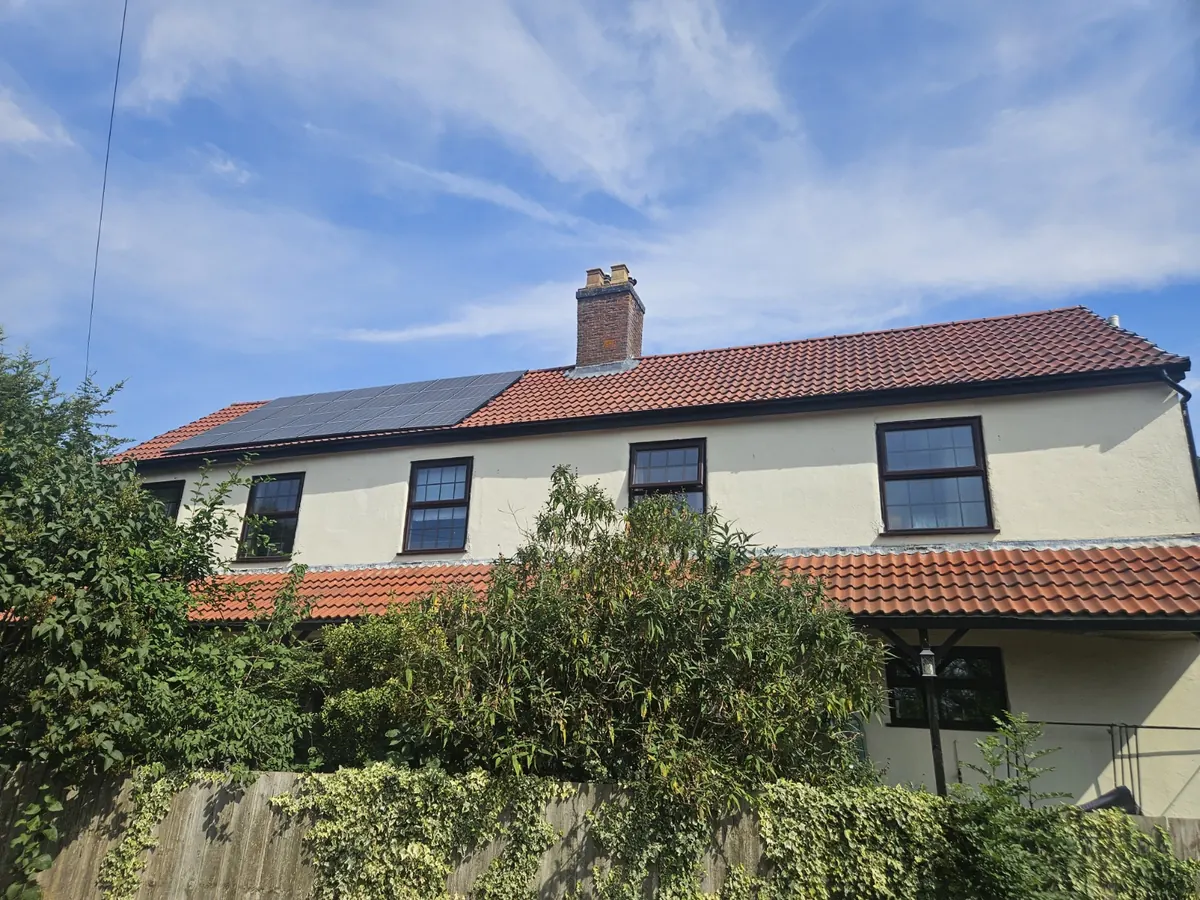
Strong case: any regular partial shading, even briefly and even from something small. Panels split across more than one face, pitch or orientation. A shading obstruction that is not going away.
If you already have a system
Optimisers can generally be retrofitted to an existing installation, and that is worth knowing if you suspect shading is costing you output.
Two things to weigh before you do. First, the access cost applies here too, so it is far cheaper bundled with other roof work than commissioned alone. Second, and more usefully: establish that you actually have a problem before paying to solve it. If your system already shows signs of underperforming, that is worth diagnosing on its own terms first, because the answer may be soiling, a setting, or an export limit rather than string losses.
What to ask before you sign
- Does my roof have shading at any point in the day or year, and have you assessed it rather than assumed it?
- Are the panels split across more than one orientation or pitch?
- What is the price difference between a plain string inverter and optimisers on this specific roof?
- Will I get per-panel monitoring, and how do I actually see it?
- If an optimiser fails in year seven, what does replacing it cost including access?
Question five is the one installers rarely volunteer, and it is the one that makes the trade-off honest.
What Eco Connect does, and does not, do here
We give independent advice on choices like this one, including whether the extra cost is justified on your particular roof. We do not install and we have nothing to sell you here. Installation is carried out by your chosen installer.