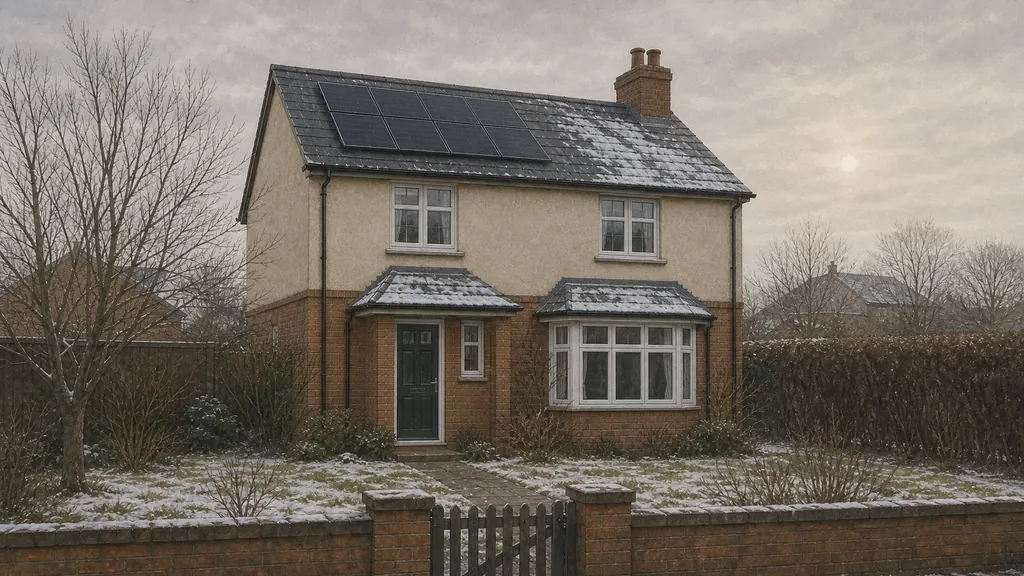
Daylight is the important ingredient
Solar photovoltaic panels use light to generate electricity. Direct, strong sunshine can increase output, but direct sunshine is not required. Diffuse daylight through cloud can still produce electricity, although usually at a lower level.
What changes on a cloudy day
Cloud reduces the intensity of light reaching the panels. Output can rise and fall as cloud moves. A cloudy day does not usually mean no generation; it usually means lower and more variable generation compared with a clear bright day.
What changes in winter
- Days are shorter, so there are fewer daylight hours.
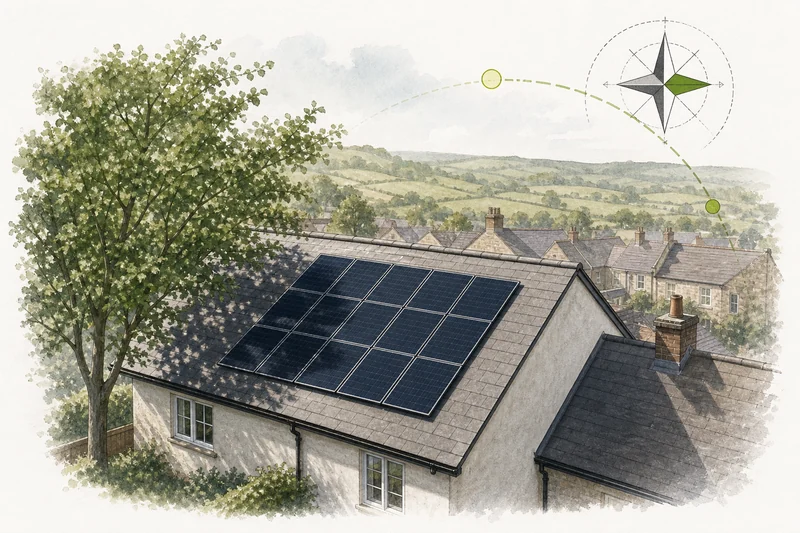
- The sun is lower in the sky, changing how light reaches the roof.
- Cloud, frost, rain, snow and surrounding shade can affect output.
- Electricity demand may be higher at the same time that solar generation is lower.
Why annual performance matters
A solar proposal should be judged over a year, not by a single winter day or a perfect summer afternoon. Seasonal variation is expected. A reasoned estimate should include annual generation and ideally show how output varies through the year.
Where a battery may help
Battery storage can move some electricity from one time of day to another, such as from daytime generation to evening use. A battery does not create energy and cannot by itself solve a poor roof, heavy shade or low winter generation.
There is a separate winter question, which is not about generation at all but about timing. Almost none of an installation happens on the roof, and the parts that take weeks are best started in the dark months. See buy solar in winter, fit it in spring.
Questions to ask before deciding
- Does the estimate reflect the actual roof direction, pitch and shade?
- Is the annual generation figure separated from seasonal assumptions?
- How much generation is expected to be used on site versus exported?
- Has battery storage been modelled realistically rather than assumed as a cure-all?
Information and source control
Information correct as of: 17 July 2026
Sources available on request or reviewed during consultation.